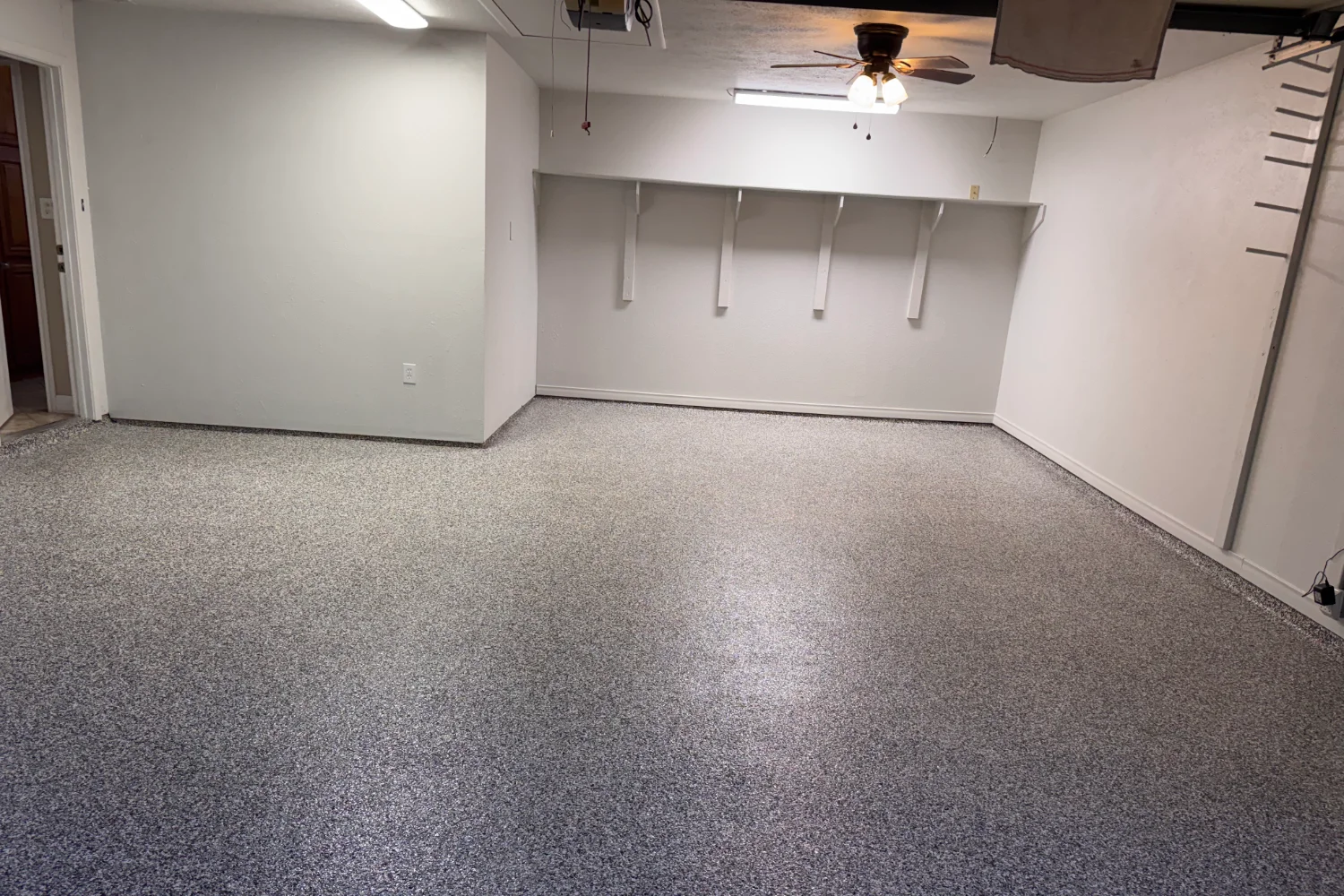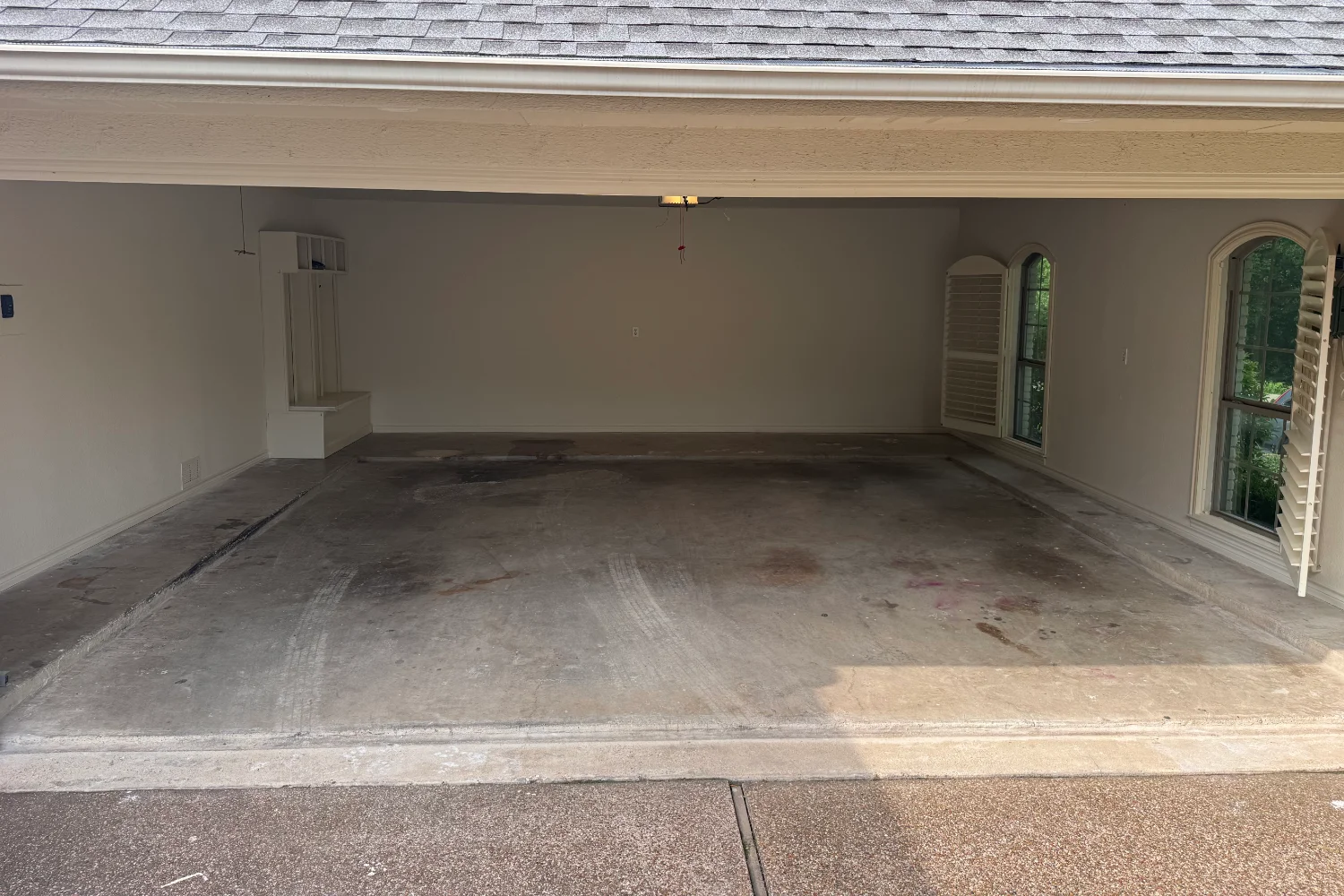
Learning how to epoxy a garage floor involves more than rolling a coating over concrete. Proper preparation, crack repair, mixing, application and curing all influence how well the finished floor performs.
A correctly installed coating can protect concrete, improve appearance and make a garage easier to maintain. However, shortcuts during preparation can lead to peeling, bubbling and poor adhesion.
Can You Epoxy a Garage Floor Yourself?
Yes. DIY epoxy kits can work when the concrete is in good condition and the manufacturer’s instructions are followed carefully.
However, professional installations usually involve more extensive preparation, including mechanical grinding, concrete repairs and professional-grade coating systems.
A professional garage epoxy floor installation in Dallas can be especially useful when the floor has cracks, oil contamination or an existing coating.
What You Need to Epoxy a Garage Floor
Before starting, make sure you have the appropriate materials and equipment.
Common items include:
- Epoxy coating system
- Concrete repair materials
- Floor grinder
- Industrial vacuum
- Degreaser
- Mixing buckets
- Rollers
- Brushes
- Squeegee
- Protective gloves and safety equipment
Once epoxy components are mixed, the material has a limited working time, so preparation should be completed beforehand.
How to Prepare a Garage Floor for Epoxy
Surface preparation is one of the most important stages of the installation.
Inspect the Concrete
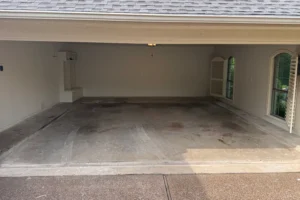
Look for cracks, previous coatings, oil stains, pitting and signs of moisture.
Damaged concrete should be repaired before the coating is installed.
Remove Oil and Contamination
Concrete can absorb automotive fluids and grease. These contaminants may prevent epoxy from bonding properly.
Use an appropriate cleaner and remove deeply embedded contamination when necessary.
Grind the Concrete
Professional installers often use diamond grinding to prepare garage floors.
Grinding helps remove weak surface material and creates a profile that allows the coating to bond more effectively.
Vacuum the Surface
After grinding, remove all dust and loose debris. The concrete should be clean and dry before coating begins.
How to Epoxy a Garage Floor Step by Step
Step 1 Prepare the Surface
Confirm that cracks are repaired and the concrete is clean, dry and properly profiled.
Step 2 Mix the Epoxy
Combine the resin and hardener according to the manufacturer’s ratio.
Incorrect mixing can cause uneven curing or soft areas.
Step 3 Apply the Edges
Use a brush or smaller roller around walls, corners and other difficult areas.
Step 4 Apply the Base Coat
Spread the epoxy evenly across the concrete using the application method recommended for the product.
Work in sections and maintain consistent coverage.
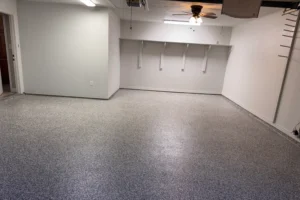
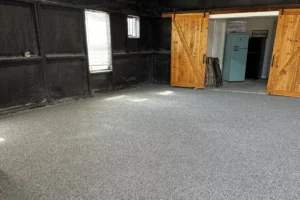
Step 5 Add Decorative Flakes
If using a flake system, broadcast the flakes while the base coat is still wet.
Coverage can range from light decoration to full broadcast.
Step 6 Remove Loose Flakes
After curing, remove excess flakes and vacuum the surface.
Step 7 Apply the Protective Topcoat
The topcoat protects the decorative layer from traffic, dirt, chemicals and abrasion.
Some professional systems combine epoxy with a polyaspartic protective layer.
Read our guide comparing epoxy vs polyaspartic garage floor coatings for more information.
Common Garage Floor Epoxy Mistakes
Several mistakes can reduce coating performance:
Poor Surface Preparation
Epoxy applied over dust, smooth concrete or contamination may peel.
Ignoring Moisture
Moisture vapor beneath the slab can contribute to coating failure.
Incorrect Mixing
Epoxy components need accurate mixing ratios.
Applying Too Much Material at Once
Epoxy begins curing once mixed. Preparing too much material can cause it to harden before application.
Using the Garage Too Soon
The coating must cure before vehicles or heavy equipment return.
DIY vs Professional Epoxy Installation
DIY can make sense when the concrete is clean, undamaged and relatively easy to prepare.
Professional installation becomes more valuable when the garage has:
- Cracks
- Existing coatings
- Oil contamination
- Moisture concerns
- High durability requirements
Professional installers also have access to mechanical preparation equipment and multi-layer coating systems.
Professional Garage Epoxy Flooring in Dallas
A garage floor should be evaluated before choosing a coating system.
Prados Concrete Coatings provides garage epoxy floor installation in Dallas as well as garage epoxy flooring in Plano and garage epoxy floor coatings in Arlington.
Frequently Asked Questions
Do You Have to Grind a Garage Floor Before Epoxy?
Not every consumer product requires grinding, but mechanical preparation is widely used professionally because it helps create a clean, consistent surface profile.
Can You Epoxy Over Cracked Concrete?
Cracks should normally be repaired before coating. Epoxy should not be treated as a substitute for proper concrete repair.
How Long Before You Can Park on Epoxy?
It depends on the coating system. Follow the manufacturer’s or installer’s curing instructions before returning vehicle traffic.
Is DIY Garage Floor Epoxy Worth It?
It can be for straightforward floors and homeowners comfortable with preparation. More complicated slabs may benefit from professional installation.
Get a Professional Garage Floor Coating in Dallas
Knowing how to epoxy a garage floor makes it clear that preparation matters as much as the coating itself.
For homeowners who want professional concrete preparation and a complete coating system, explore professional garage epoxy flooring in Dallas.