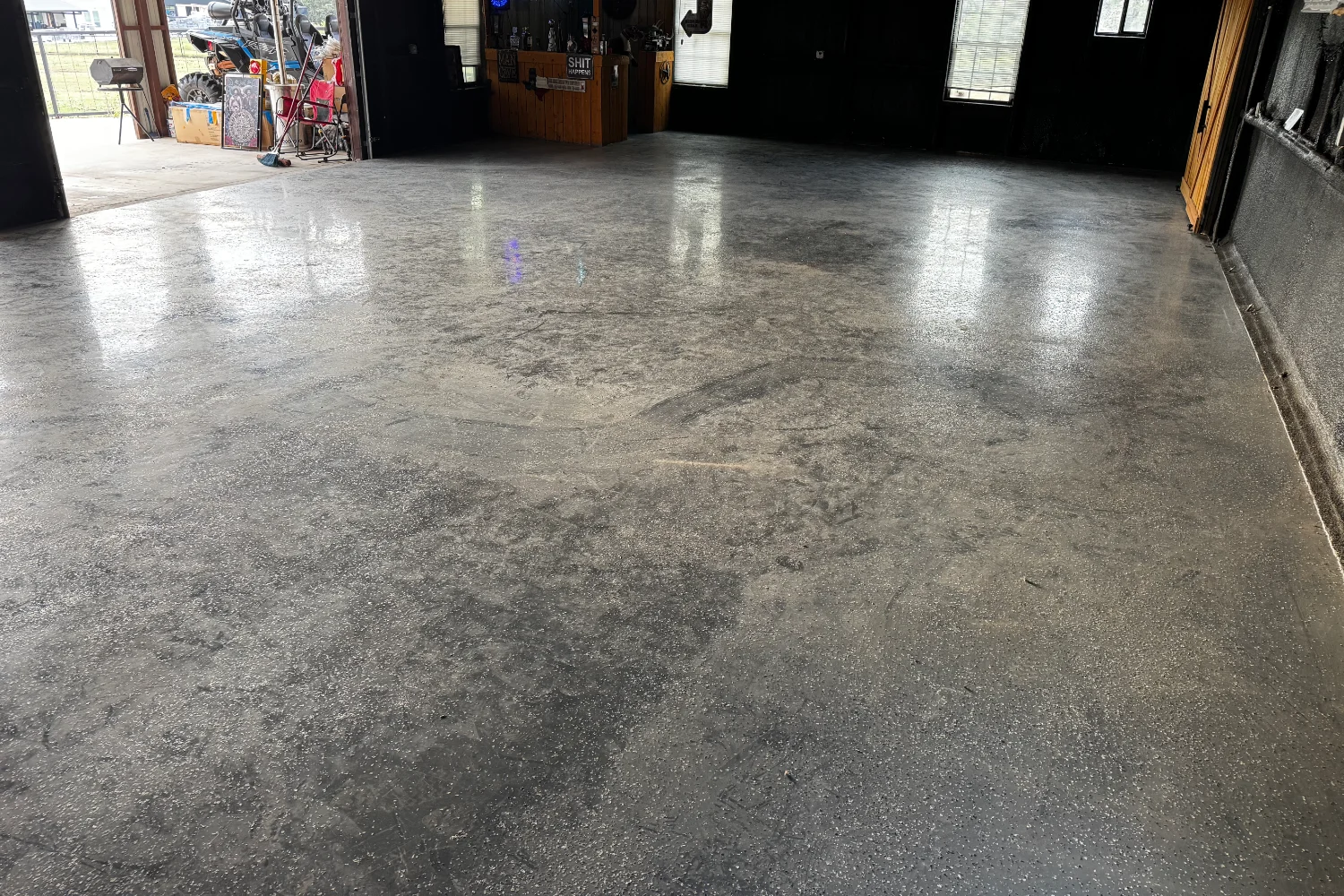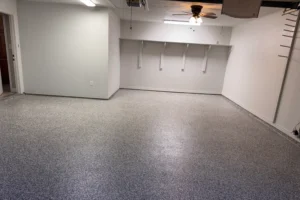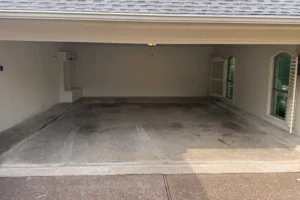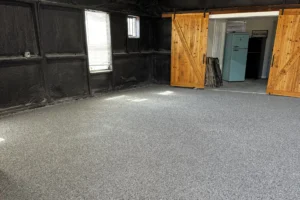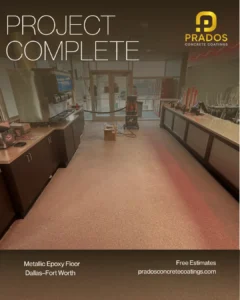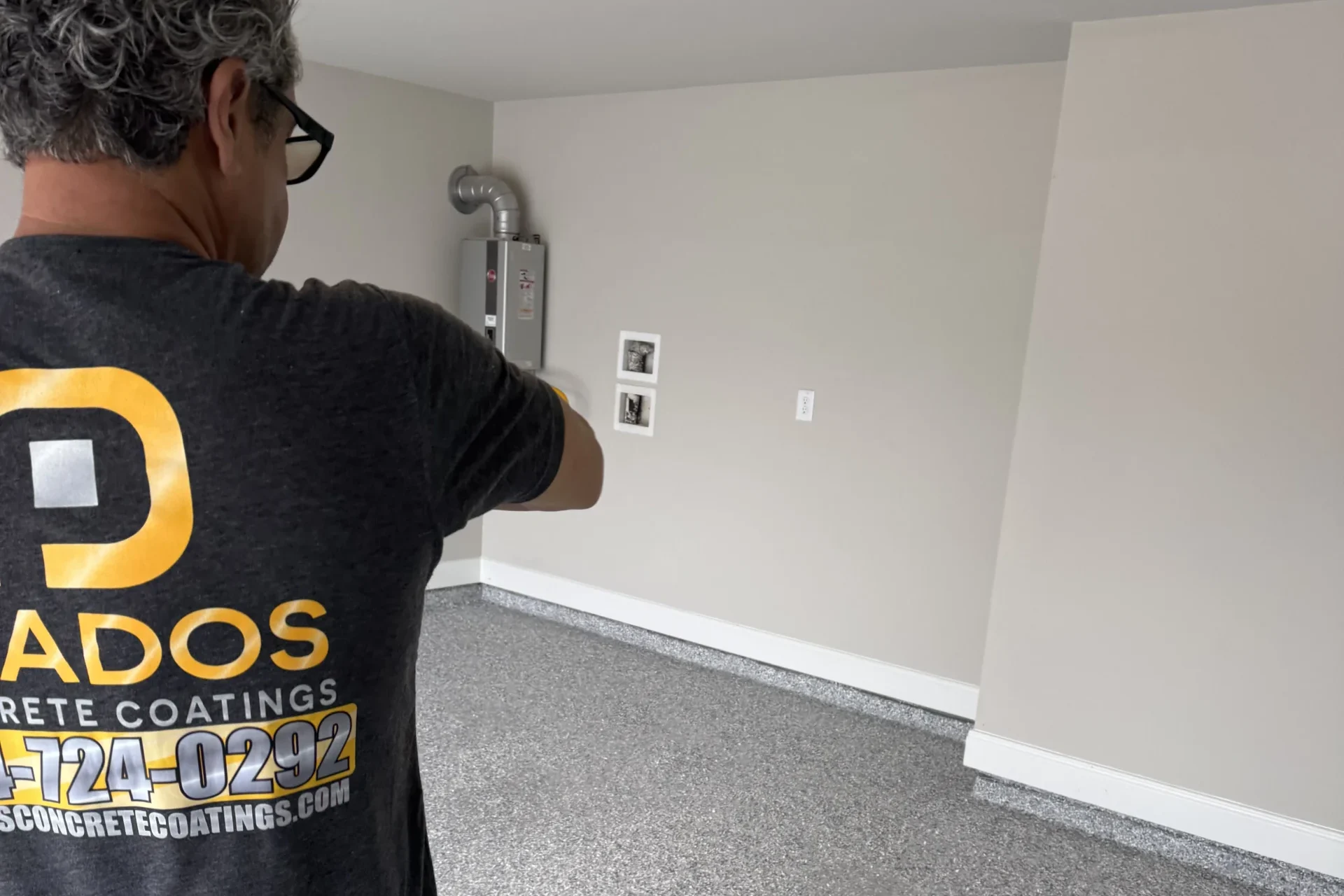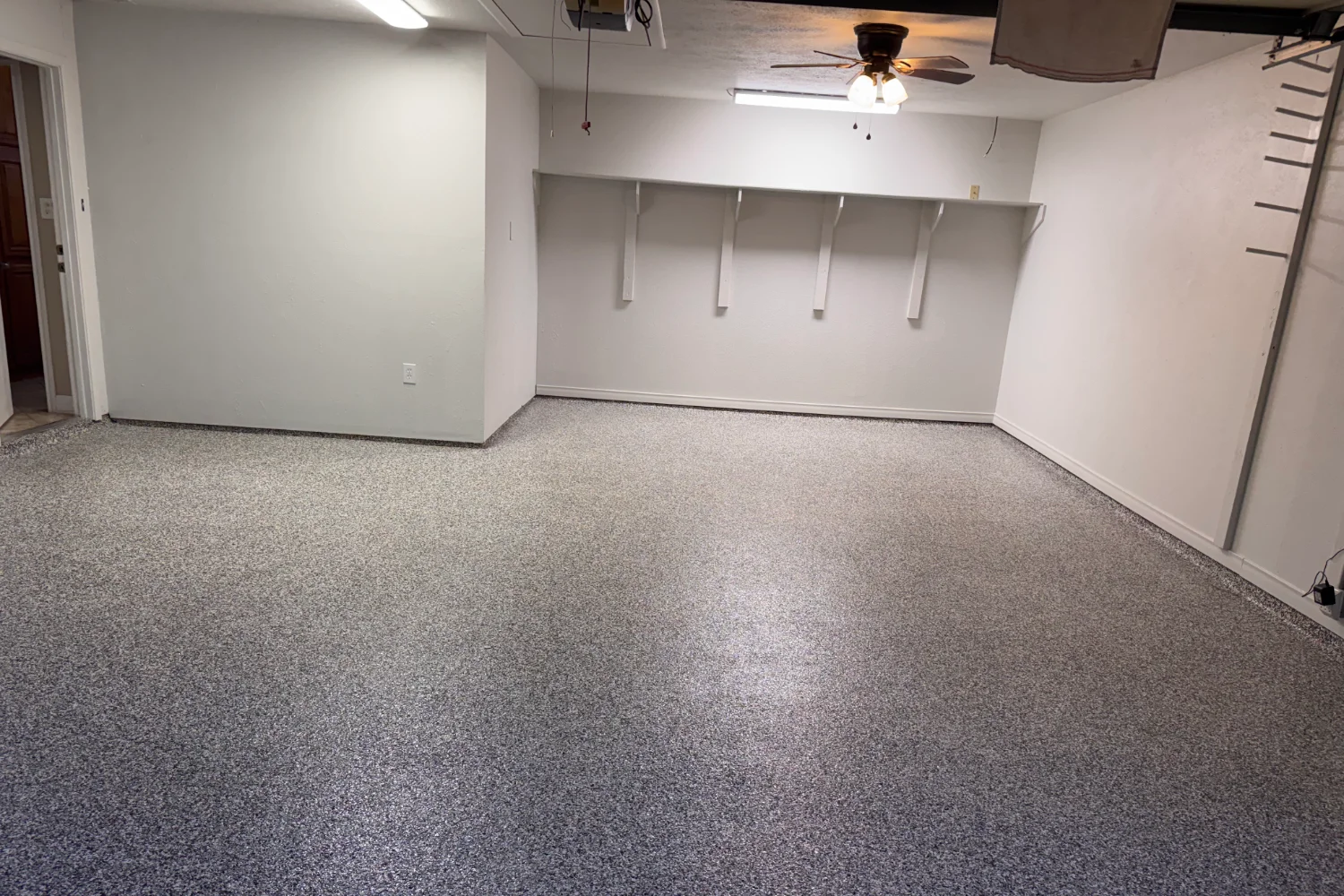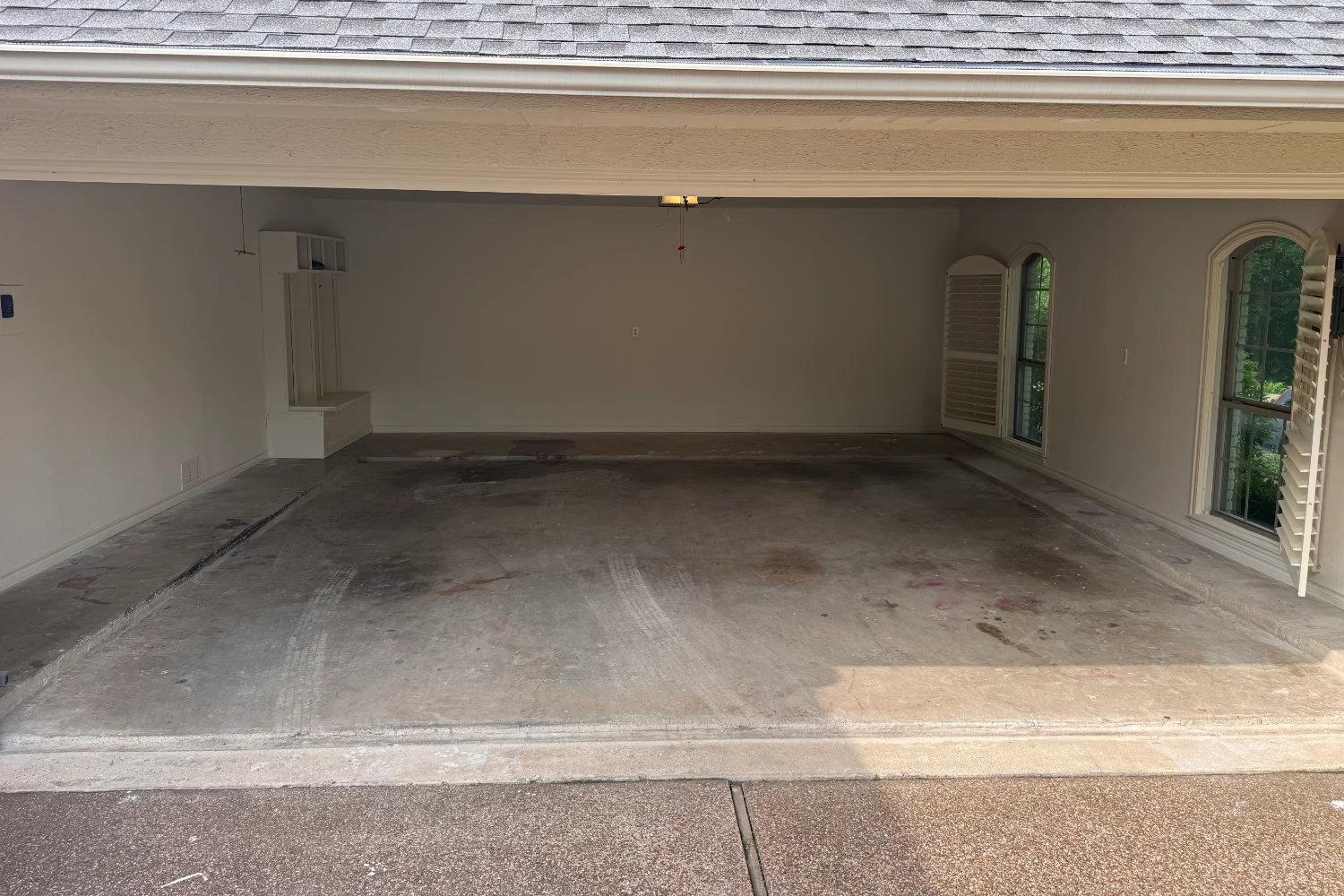
When you upgrade a garage floor in Texas, the two most common options are polyaspartic vs epoxy coatings. Both improve the look and protection of concrete, but they behave very differently in heat, sun, and day-to-day use.
What is epoxy garage flooring?
Epoxy flooring is a two‑part system made by mixing a resin with a hardener to create a rigid plastic layer that bonds tightly to concrete. Once cured, it forms a hard, glossy surface that resists many chemicals, impacts and abrasion, which is why it has been widely used in garages, warehouses and industrial areas for decades.
Epoxy is available in many colors and finishes, including solid colors, decorative flakes and metallic effects, so it can deliver a high‑end look at a relatively affordable cost. The main trade‑offs are its longer curing time and its sensitivity to UV light, which can cause yellowing or fading in sun‑exposed garages.
What is polyaspartic floor coating?
Polyaspartic is a newer type of polyurea coating engineered for fast curing and high performance. It creates a dense, flexible film that adheres strongly to concrete and offers excellent resistance to abrasion, chemicals and hot tire pickup.
Unlike standard epoxy, polyaspartic is inherently UV‑stable, meaning it does not yellow or chalk when exposed to sunlight, an important advantage for Texas garages that spend a lot of time with the door open. Polyaspartic systems can also be combined with flake and quartz broadcast systems, giving you similar or greater design flexibility than epoxy.
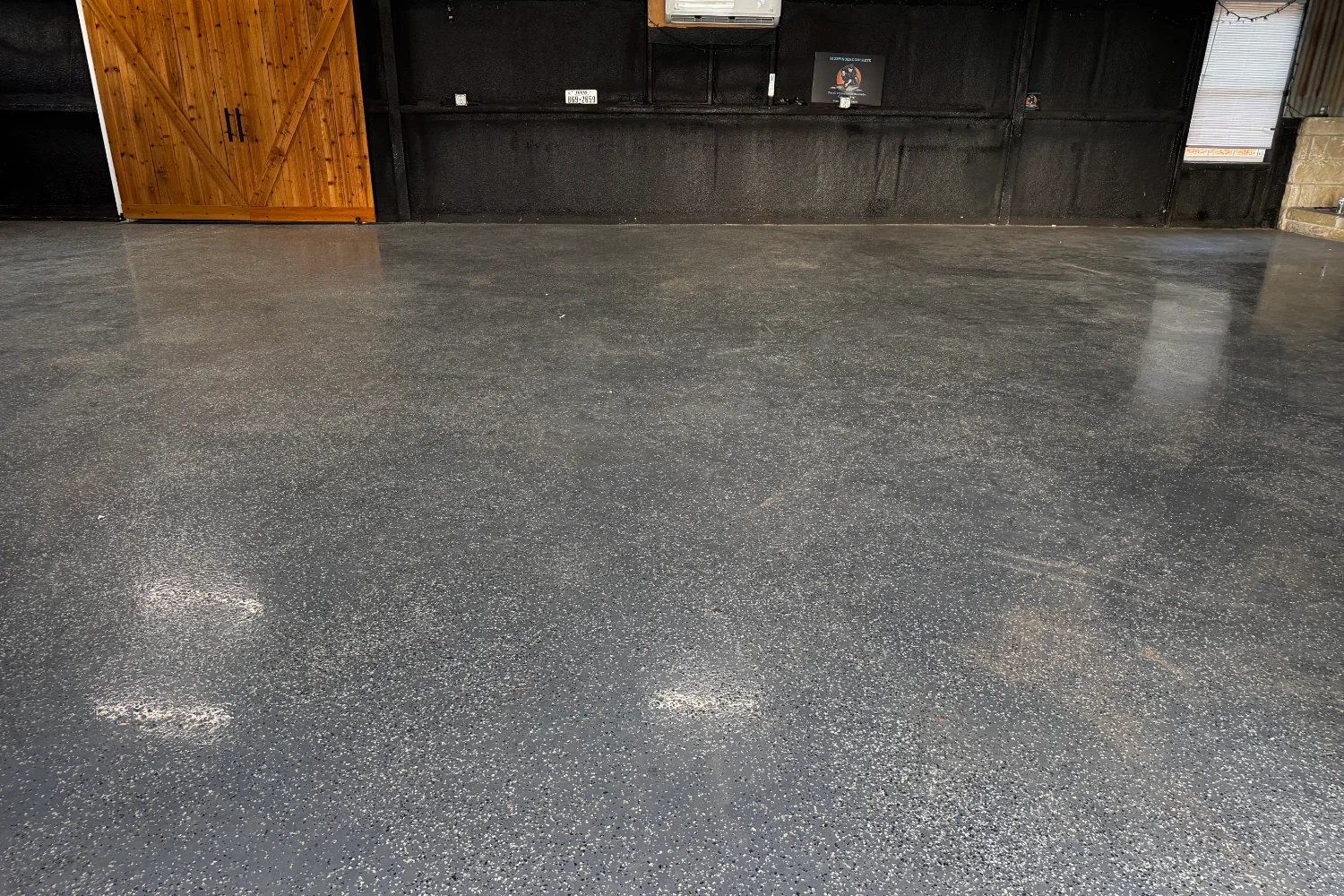
Cure time: how fast can you use your garage again?
Epoxy coatings normally require multiple days to reach full strength. Many systems need 3–5 days before vehicles can be parked on the surface, which means your garage may be out of service for most of a week.
Polyaspartic coatings are designed to cure much faster. Contractors routinely report same‑day installations, with floors ready for light use in a few hours and for vehicle traffic in about 24 hours. For homeowners who rely on their garage every day or have limited driveway space, that shorter downtime is a major benefit.
Durability and lifespan
Both epoxy and polyaspartic coatings are far more durable than bare concrete, but they age differently. Properly installed epoxy stands up well to vehicles and normal traffic, yet it can become brittle over time and is more prone to chipping, abrasion and peel‑off under hot tires or heavy impact.
Polyaspartic coatings are formulated to be more flexible and more resistant to abrasion and chemical attack, so they better absorb thermal movement and mechanical stress without cracking. Industry comparisons often show polyaspartic floors lasting 10–20 years or more, while typical epoxy systems may need serious repair or replacement after roughly 5–10 years, depending on use and conditions.
UV resistance and color stability in Texas sun
Standard epoxy has limited UV resistance. Under strong sunlight, especially near garage doors or on driveways, epoxy can yellow, chalk or lose gloss over time. In hot, sunny regions this color shift can become noticeable within just a few seasons.
Polyaspartic coatings are built to be UV‑stable, maintaining their color and finish even with regular sun exposure. For Texas garages and outdoor areas, that means decorative flake or quartz floors stay closer to their original look for many years.
Temperature and weather performance
Epoxy products have a relatively narrow application window and are sensitive to temperature and humidity during installation. Cold conditions slow down curing, and high heat can shorten working time and make it harder to achieve a smooth finish.
Polyaspartic systems can often be installed across a wider temperature range, and they still cure quickly in both cooler and hotter environments. This flexibility allows professional installers to schedule projects more easily throughout the year—even in climates with big temperature swings—and helps ensure consistent results.
Maintenance and everyday use
Both types of coating create a seamless surface that is easier to clean than raw concrete, which naturally sheds dust and absorbs stains. Epoxy floors are relatively low‑maintenance but can be more vulnerable to long‑term staining and hot tire pickup, so spills should be cleaned promptly and heavy use can eventually dull the finish.
Polyaspartic floors typically offer stronger resistance to oil, road salt, automotive fluids and household chemicals, and they better resist tire marks and abrasion from regular parking and movement. For busy households that use the garage as a workshop, gym or everyday entryway, that extra resilience translates into less visible wear and less time spent on maintenance.
Cost and long‑term value
Epoxy usually has the lower upfront price, which makes it attractive when budget is the primary concern or when the floor is expected to be a shorter‑term solution. However, the combination of longer cure times, UV sensitivity and greater risk of chipping or peeling can lead to more frequent repairs or a full recoat sooner than expected.
Polyaspartic coatings generally cost more per square foot, but they deliver faster return to service, better UV performance and longer functional life. For homeowners who plan to stay in their property and want a “do it once and forget it” upgrade, the total cost of ownership over 10–20 years often favors polyaspartic systems.
So, which is better for your Texas garage?
If you need the lowest initial cost and are comfortable with several days of curing and some risk of yellowing in sun‑exposed areas, a quality epoxy system can still be a solid upgrade over bare concrete.
However, if your priority is fast installation, strong UV resistance and maximum durability in a hot, sunny climate, polyaspartic coatings clearly have the advantage. They allow same‑day turnaround, hold color better in Texas sun, and typically last longer under daily vehicle traffic, temperature changes and chemical exposure.
For most Texas homeowners who want a long‑lasting, low‑maintenance and good‑looking garage floor, polyaspartic is usually the smarter long‑term investment