When an epoxy floor starts peeling, lifting, or separating from the concrete, the problem is usually related to adhesion between the coating and the surface underneath it.
Poor preparation is one of the most common causes, but moisture, contamination, damaged concrete, incorrect application, curing problems, and heavy vehicle use can also contribute.
For homeowners considering professional garage epoxy flooring in Dallas, understanding why coatings fail can help prevent expensive repairs later.
What Causes Epoxy Floors to Peel?
Epoxy flooring can peel when the coating does not form a strong and stable bond with the concrete.
Common causes include:
- Poor surface preparation
- Moisture in the concrete
- Oil and grease contamination
- Existing paint or coatings
- Concrete cracks or deterioration
- Incorrect mixing or application
- Improper curing
- Heavy traffic or hot tires
In many cases, peeling is not simply a cosmetic issue. It is a sign that the coating is losing adhesion.
Poor Surface Preparation
Surface preparation is one of the most important parts of an epoxy installation.
Concrete may look clean but still be too smooth, contaminated, or improperly profiled for the coating to bond correctly.
Cleaning Is Not the Same as Preparing Concrete
Sweeping, washing, or degreasing a garage floor removes surface dirt, but that does not necessarily prepare the concrete for epoxy.
Professional preparation may involve mechanical grinding to create the correct surface profile.
Homeowners can learn more about how to prepare a garage for epoxy floor installation.
Why Concrete Grinding Matters
Mechanical grinding opens the surface of the concrete and helps remove weak material, old coatings, and some contaminants.
This creates a better surface for the coating to bond with.
Even a high-quality epoxy system can fail if it is installed over poorly prepared concrete.
Moisture Under the Epoxy Coating
Moisture can also contribute to epoxy peeling.
Concrete is porous, and moisture can move through a slab under certain conditions. If moisture becomes trapped beneath the coating or interferes with adhesion, the surface may eventually bubble, lift, or separate.
Garages with recurring damp areas, visible moisture, or cracking should be evaluated before coating.
If the concrete is already damaged, review whether you can epoxy over cracked concrete.
Oil, Grease and Other Contaminants
Garage floors are frequently exposed to oil, automotive fluids, grease, cleaners, and other chemicals.
Because concrete is porous, contaminants can penetrate below the visible surface.
A floor may look clean after washing while still containing residue that interferes with adhesion.
That is why professional preparation focuses on the condition of the concrete itself, not only how clean it appears.
Applying Epoxy Over an Existing Coating
Old paint, sealers, or previous coatings can also cause problems.
If the existing layer is already peeling or poorly bonded, installing a new coating over it does not solve the original problem.
The new system can only perform as well as the surface underneath it.
Old or unstable coatings may need to be removed before the concrete is properly prepared.
Concrete Cracks and Surface Damage
Cracks, pitting, spalling, and deteriorated concrete can also affect epoxy performance.
These areas should normally be evaluated and repaired before coating.
Simply applying epoxy over damaged concrete may improve the appearance temporarily, but it does not correct movement or deterioration within the slab.
Incorrect Mixing or Application
Epoxy coatings depend on chemical reactions between their components.
Incorrect mixing ratios, insufficient mixing, excessive coating thickness, improper application timing, or unsuitable conditions can affect curing and adhesion.
This is one reason professional installation involves more than simply rolling material onto the floor.
Curing Problems
A newly coated garage floor needs time to cure before it is exposed to normal use.
Driving vehicles onto the surface too soon or placing heavy loads on the coating before it has developed sufficient strength can damage the finish.
Temperature and environmental conditions can also influence the curing process.
Can Texas Heat Cause Epoxy to Peel?
Texas heat alone does not automatically cause epoxy flooring to peel.
However, high temperatures, UV exposure, hot tires, and heavy vehicle use create more demanding conditions for garage floor coatings.
A properly prepared surface and suitable coating system are especially important in North Texas.
Learn more about how epoxy flooring performs in extreme Texas heat.
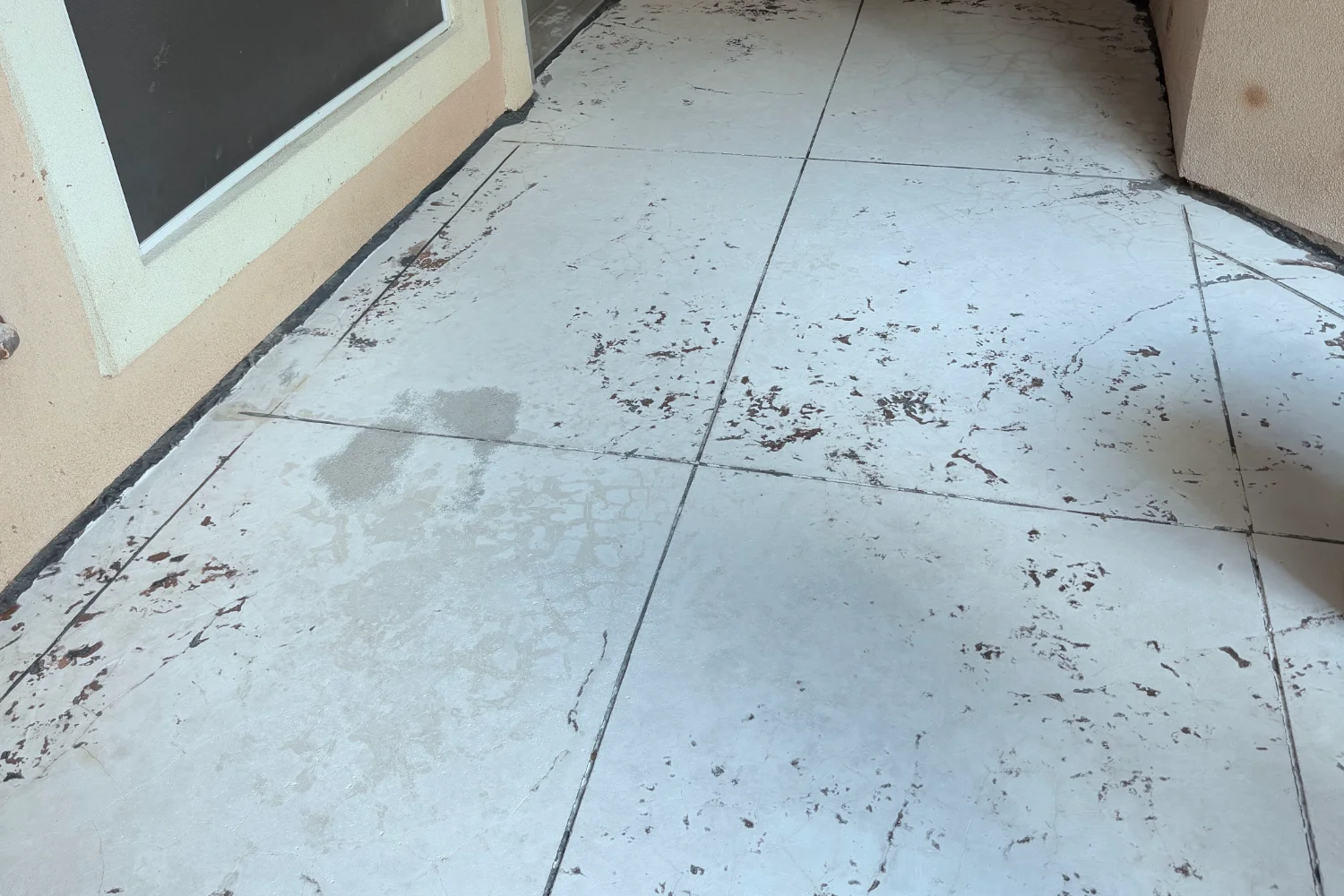
Why Does Epoxy Peel Under Car Tires?
Peeling beneath parked vehicles is often associated with a combination of hot tires, weak adhesion, and coating performance.
Tires can become extremely hot after driving on Texas roads. When a vehicle remains parked, heat and pressure are concentrated in small areas of the floor.
If the coating bond is already weak, those areas may be more likely to lift.
Can Peeling Epoxy Be Repaired?
Sometimes.
A small localized failure may require a different solution than a coating that is peeling across large sections of the garage.
The important step is identifying why the coating failed before applying another layer.
Recoating without correcting the original cause can lead to the same problem again.
How to Prevent Epoxy Floors From Peeling
The best prevention starts before installation.
A reliable process should include:
Inspect the Concrete
Identify cracks, moisture, old coatings, contamination, and damaged areas.
Repair Surface Damage
Cracks and deteriorated sections should be treated before coating.
Mechanically Prepare the Floor
Proper grinding and profiling help improve adhesion.
Address Moisture and Contamination
Problems beneath the coating should not be ignored.
Use the Right Coating System
The materials should match the way the garage will be used.
Follow Proper Curing Requirements
The coating should be allowed to cure before normal vehicle traffic begins.
Does Professional Epoxy Flooring Last Longer?
Professional installation can reduce many of the risks associated with poor preparation and application, but coating lifespan still depends on usage, maintenance, environment, and the condition of the concrete.
Understanding how long an epoxy floor can last can help homeowners evaluate long-term performance.
Homeowners deciding between installation methods can also compare a DIY epoxy garage floor vs professional installation.
Prevent Epoxy Peeling With Proper Preparation
The best way to prevent peeling is to focus on the concrete before the coating is installed.
Surface preparation, repairs, moisture evaluation, coating selection, and proper curing all contribute to long-term adhesion.
Prados Concrete Coatings provides professional garage floor coating services throughout Dallas and the DFW area.
You can request a garage floor coating estimate in Dallas to evaluate your concrete and determine the preparation and coating system your floor needs.
Frequently Asked Questions
Why is my epoxy garage floor peeling?
Poor preparation, moisture, contamination, damaged concrete, application problems, or heavy vehicle use can all contribute.
Can moisture make epoxy peel?
Yes. Moisture can interfere with adhesion and may cause bubbling, lifting, or coating failure.
Why does epoxy peel under car tires?
Hot tires and repeated vehicle pressure can expose weak adhesion or an unsuitable coating system.
Can you repair peeling epoxy?
Often yes, but the cause of the failure should be corrected before recoating.
Does concrete need to be ground before epoxy?
Mechanical grinding is commonly used in professional installations to create a surface profile that improves coating adhesion.