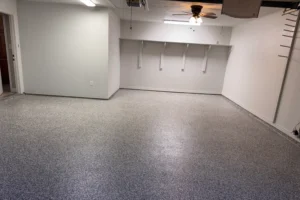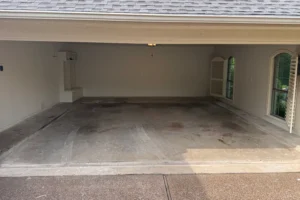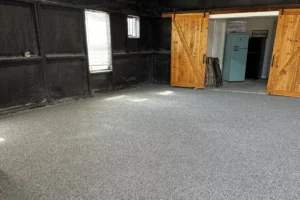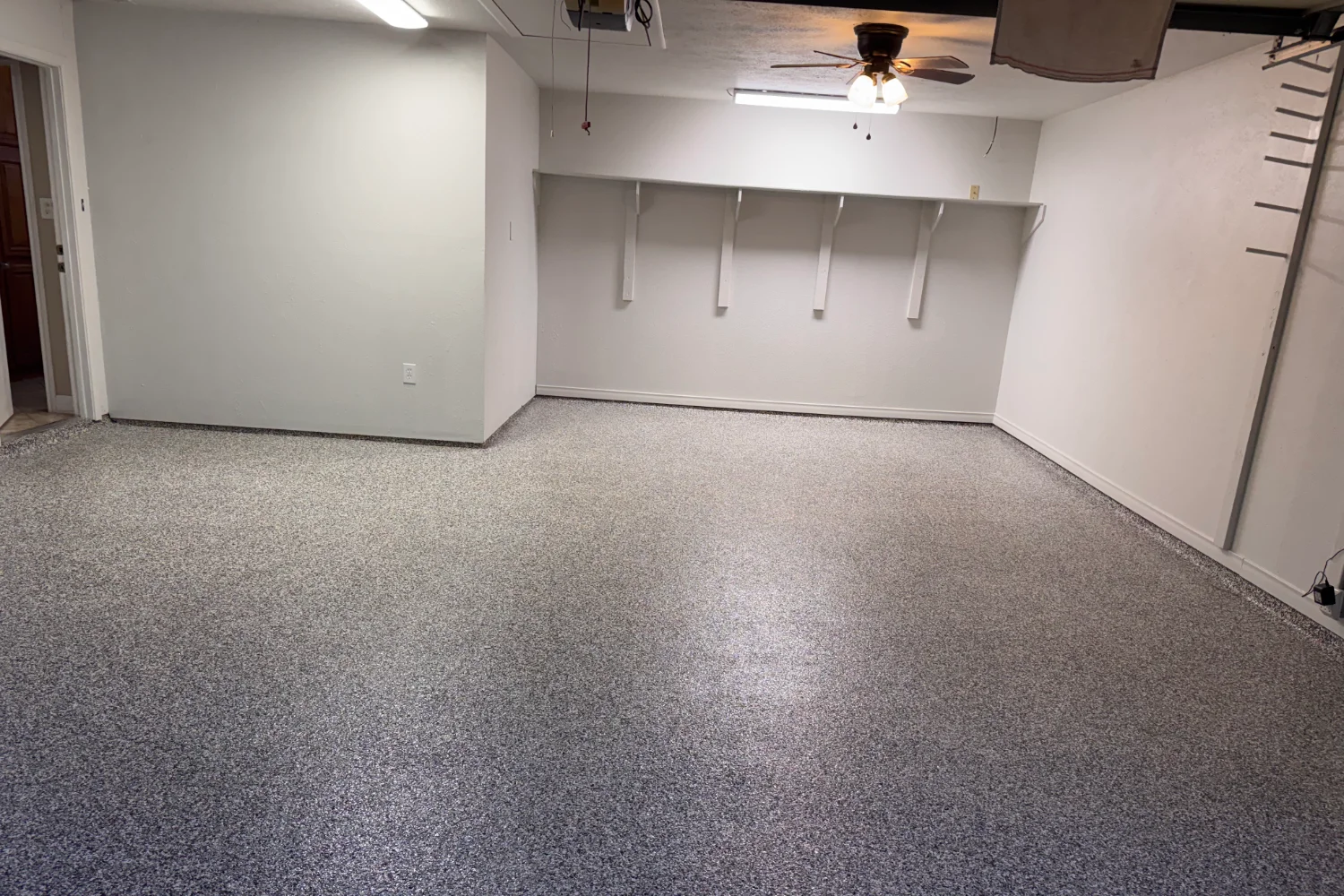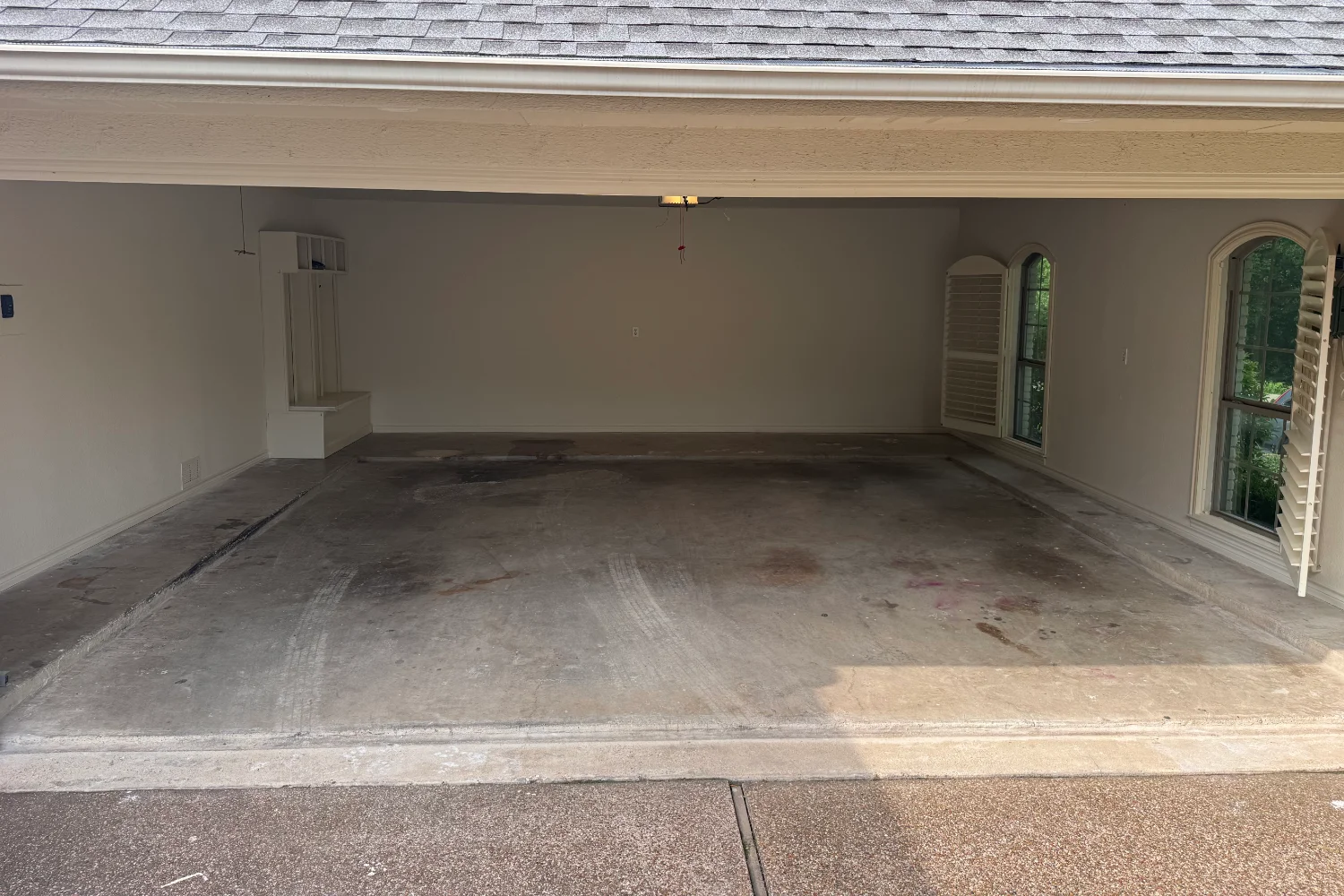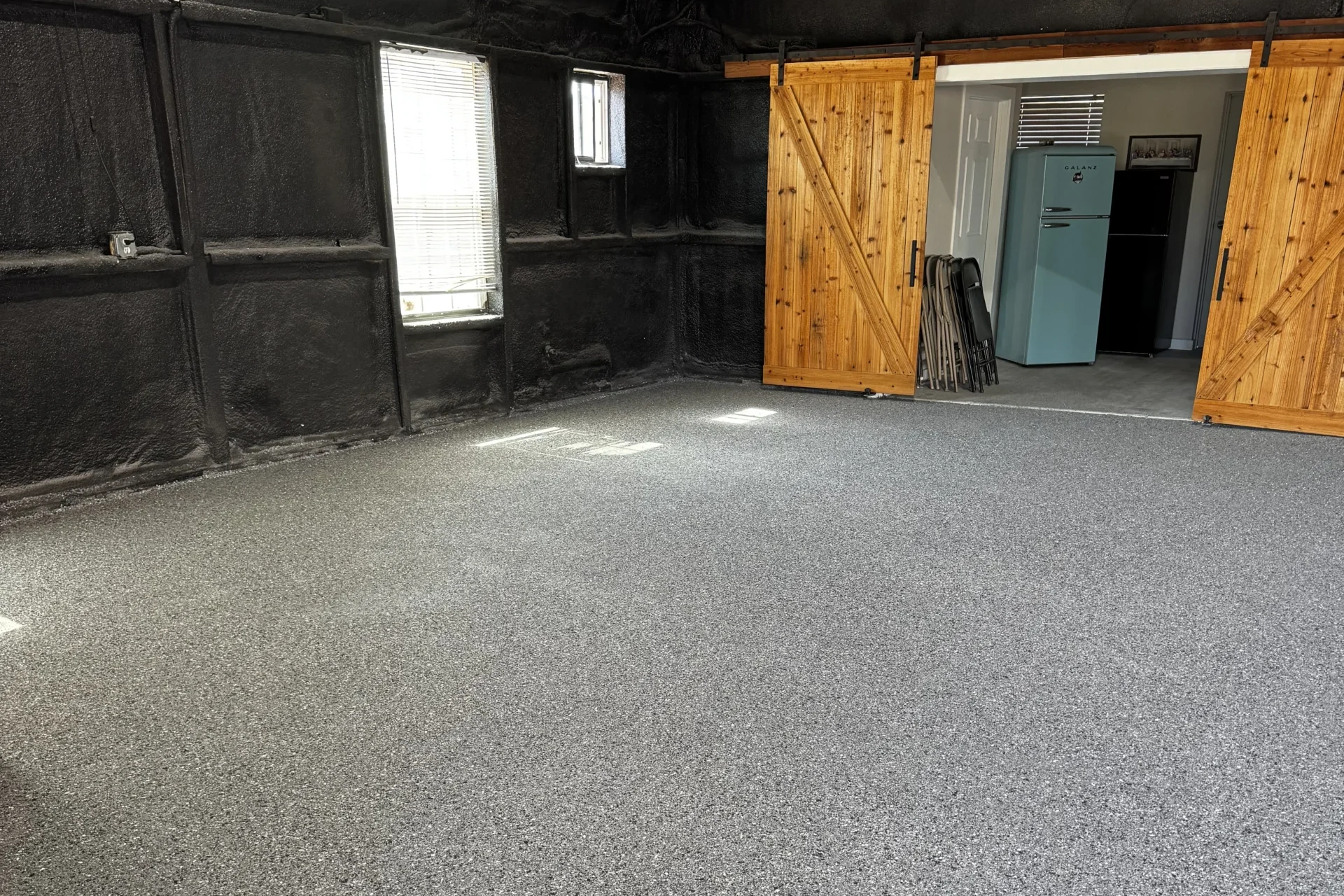
Installing a professional garage floor coating can completely change the appearance and functionality of a garage.
However, homeowners also have an important role before installation begins.
Preparing the space correctly allows the flooring crew to access the entire concrete surface, protects personal belongings and helps the project move efficiently from preparation through final coating.
If you are planning an epoxy or polyaspartic garage floor installation in Dallas–Fort Worth, this guide explains what you should do before the installers arrive and what should be left to the professionals.
Remove Everything From the Garage Floor
The first step is simple: clear the garage.
Vehicles, storage boxes, tools, bicycles, shelving units and other movable items should be removed before installation begins.
The flooring crew needs access to the entire concrete surface.
Anything resting directly on the floor can interfere with:
- Concrete grinding
- Crack repair
- Edge preparation
- Vacuuming
- Coating application
- Decorative flake installation
- Topcoat application
For homeowners scheduling a garage epoxy floor in Dallas, clearing the space in advance helps the installation team begin work immediately.
What Should Be Removed From the Garage?
Ideally, remove:
- Cars
- Motorcycles
- Bicycles
- Toolboxes
- Storage bins
- Lawn equipment
- Portable shelving
- Sports equipment
- Cardboard boxes
- Furniture
- Mats and rugs
- Trash cans
Anything that can reasonably be moved should be relocated before installation.
Items can be temporarily stored inside the home, in a storage unit, shed or another protected location.
What About Heavy Cabinets and Workbenches?
Large cabinets, built-in storage systems and heavy workbenches require more consideration.
If an item is permanently attached to the wall and does not interfere with access to the floor, it may be possible to leave it in place.
However, equipment sitting directly on the concrete may need to be moved.
Discuss these items with the contractor before installation day.
That prevents delays and makes it clear which areas of the floor will receive coating.
Remove Items From Lower Shelves
Even when shelving does not need to be removed, it is a good idea to move valuable or sensitive items away from the work area.
Mechanical concrete preparation can create vibration and dust.
Professional grinding systems generally use dust extraction equipment, but preparing concrete is still construction work.
Protect:
- Electronics
- Valuable tools
- Documents
- Fabric
- Collectibles
- Food products
- Sensitive equipment
Closing boxes or covering items stored above the floor can provide additional protection.
Move Your Vehicles Before Installation Begins
Vehicles should be removed before the flooring crew arrives.
Plan where they will remain during installation and curing.
Depending on the coating system, the garage may not be available for vehicle traffic immediately after the final coat is installed.
Your contractor should explain when the floor can safely handle:
- Foot traffic
- Light storage
- Heavy equipment
- Vehicle traffic
Do not park a vehicle on the floor earlier than recommended.
Allowing the coating to cure properly is an important part of the installation process.
Do You Need to Clean the Garage Floor First?
Basic cleaning is useful, but homeowners generally do not need to perform deep concrete preparation themselves.
Remove loose debris, trash and personal belongings.
You can sweep obvious dirt if necessary.
However, professional installers should handle the actual surface preparation required for coating adhesion.
This may include:
- Diamond grinding
- Existing coating removal
- Degreasing contaminated areas
- Vacuuming
- Crack repair
- Surface repairs
Homeowners considering garage floor coatings in Plano should avoid applying new cleaners, sealers or coatings shortly before professional installation unless instructed by the contractor.
Some products can leave residues that complicate preparation.
Do Not Paint the Floor Before Installation
If you have already decided to hire a professional coating company, avoid painting or applying a DIY epoxy product to improve the appearance before installation.
The professional crew may need to remove that material completely.
Additional coating removal can increase the preparation required.
Leaving the original concrete visible allows the contractor to evaluate its condition more accurately.
Tell the Contractor About Existing Coatings
If the garage has previously been painted or coated, inform the installer before the project begins.
Existing materials may include:
- Concrete paint
- DIY epoxy
- Professional epoxy
- Sealer
- Clear coat
- Previous repair products
Some coatings are obvious, while others can be difficult to identify visually.
Knowing the floor’s history helps the contractor plan the necessary preparation.
Identify Oil and Chemical Stains
Garage concrete frequently contains oil, grease or automotive fluid stains.
Do not worry if every stain cannot be removed before the contractor arrives.
However, identifying areas with significant contamination can help with inspection.
Oil can penetrate deeply into porous concrete and may require specialized preparation.
A coating should never simply be applied over contaminated concrete.
Tell Your Contractor About Cracks
Cracks are common in garage slabs.
Small cracks do not automatically prevent a floor from being coated, but they should be evaluated.
Take note of:
- Long cracks
- Wide cracks
- Areas that have changed recently
- Pitting
- Uneven sections
- Spalling
- Previous repairs
Professional installers can determine what preparation or repair is appropriate before applying the coating.
Homeowners scheduling garage epoxy flooring in Arlington should mention significant concrete damage when requesting their estimate rather than waiting until installation day.
Check for Water or Moisture Problems
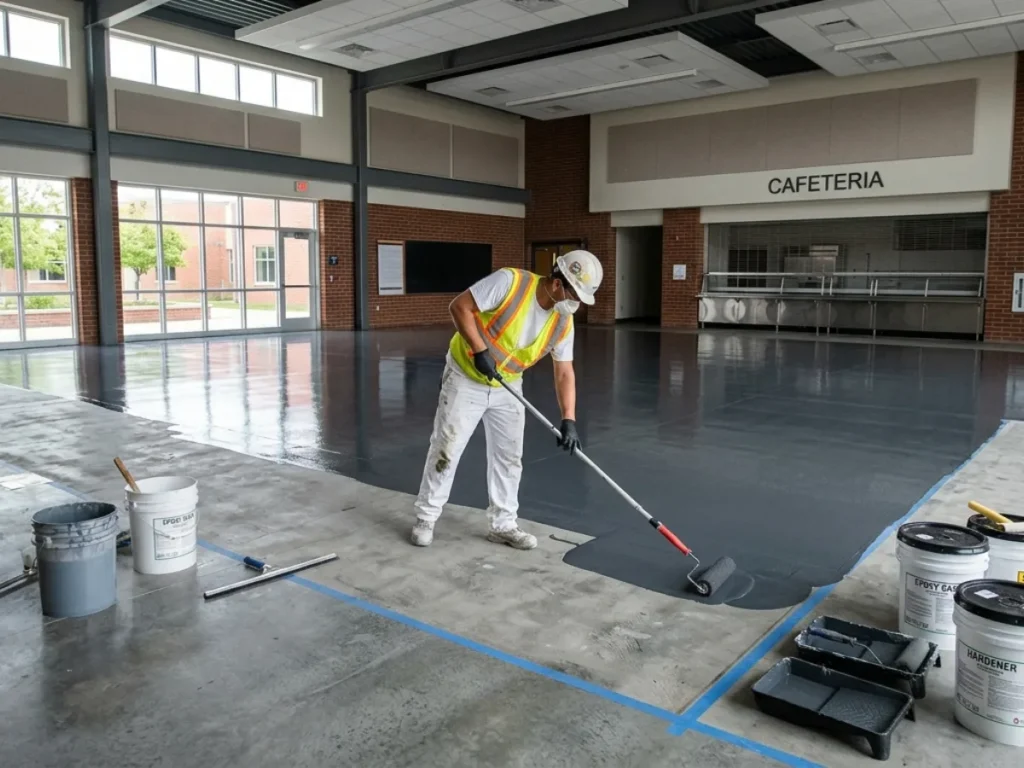
If water regularly enters the garage, identify the cause before installing a new floor.
Possible problems include:
- Garage door leaks
- Drainage problems
- Plumbing leaks
- Irrigation
- Previous flooding
- Moisture coming through the concrete
A floor coating improves the surface but does not correct exterior drainage or plumbing problems.
Unresolved moisture may affect the concrete and potentially the coating system.
Plan for Garage Access
Installation equipment needs to reach the garage.
Keep the driveway and access path clear when possible.
Professional installers may need space for:
- Grinding equipment
- Dust extraction systems
- Coating materials
- Mixing equipment
- Tools
Vehicles blocking the garage entrance can slow down the project.
If your property has unusual access restrictions, let the contractor know in advance.
Keep Children and Pets Away From the Work Area
Garage floor installation involves equipment and professional coating materials.
Children and pets should remain away from the garage while installers are working.
This protects them and prevents accidental contact with wet materials or equipment.
Keep interior doors leading to the garage closed when appropriate.
Choose Your Garage Floor Colors Before Installation
One of the best parts of installing a new garage floor is choosing the appearance.
Do not wait until installation has already started to make your design decisions.
Review available:
- Flake combinations
- Solid colors
- Quartz finishes
- Metallic finishes
- Decorative options
Prados provides multiple garage floor color options that allow homeowners to coordinate the flooring with walls, cabinets, vehicles and the overall garage design.
Making these choices before installation helps avoid delays.
Understand the Garage Floor Installation Process
Knowing what will happen can make preparation much easier.
A typical professional project can involve several stages.
Step 1 Concrete Inspection
The existing slab is evaluated for cracks, contamination, coatings and damage.
Step 2 Surface Preparation
Mechanical preparation creates the appropriate surface profile.
Step 3 Repairs
Cracks and damaged areas are addressed as necessary.
Step 4 Base Coat Application
The primary coating layer is applied to the prepared concrete.
Step 5 Decorative Material
Flakes or other decorative materials may be incorporated depending on the selected system.
Step 6 Protective Topcoat
A protective coating completes the system.
Exact procedures depend on the floor and coating system being installed.
How Long Before You Can Use the Garage Again?
Cure time depends on the materials used, environmental conditions and the flooring system.
Your installer should provide specific instructions.
There may be separate timeframes for walking on the floor and parking a vehicle.
Following these instructions is important.
Putting heavy equipment or vehicles on the coating too early can affect the finished surface.
What Should You Do After Installation?
Once your contractor confirms the floor is ready for use, return belongings carefully.
Avoid dragging heavy metal cabinets or equipment directly across the new surface.
Lift heavy items whenever possible.
You may also consider using appropriate protective pads underneath very heavy furniture or equipment.
Routine maintenance is generally straightforward.
Regular sweeping and cleaning spills when they occur can help keep the floor looking good.
Prepare for Your Garage Floor Installation in Dallas Fort Worth
Good preparation helps your garage floor project begin smoothly.
Before installation:
- Remove vehicles.
- Clear the floor.
- Relocate movable storage.
- Identify cracks and contamination.
- Tell the contractor about previous coatings.
- Address active water problems.
- Choose your preferred color or finish.
- Keep the work area accessible.
- Make arrangements for children and pets.
- Follow curing instructions after installation.
Prados Concrete Coatings provides professional garage and residential concrete coating services throughout Dallas and the DFW area.
If you are preparing to upgrade your garage, explore our garage floor coating services in Dallas and request an evaluation of your existing concrete.
Homeowners planning other improvements can also explore residential epoxy flooring in Fort Worth for additional concrete surfaces.
Frequently Asked Questions About Preparing for Garage Floor Installation
Do I need to empty my entire garage before epoxy installation?
Movable items should generally be removed so the installers can access the entire floor. Discuss permanently installed cabinets or heavy equipment with the contractor beforehand.
Should I pressure wash my garage before epoxy installation?
Usually, professional installers will handle the surface preparation required for coating adhesion. Ask your contractor before pressure washing or applying cleaning products.
Do I need to repair cracks before the installer arrives?
No. It is generally better to let the flooring contractor evaluate and repair cracks using methods compatible with the coating system.
Can I leave shelves in the garage during installation?
Wall-mounted shelving may be able to remain if it does not interfere with floor access, but movable shelves sitting on the concrete should normally be removed.
When can I park my car on a new garage floor coating?
Vehicle return time depends on the specific coating system and curing conditions. Always follow the installer’s instructions before parking on the finished floor.