When homeowners in Dallas and Fort Worth begin researching garage floor coatings, two terms appear repeatedly: Epoxy vs Polyaspartic.
Both materials can be part of a professional concrete coating system, but they are not exactly the same. They differ in cure time, UV stability, application, flexibility and the role they can play within a garage floor system.
For Texas homeowners, choosing between epoxy and polyaspartic should not simply come down to which material sounds stronger. The condition of the concrete, exposure to sunlight, vehicle traffic, temperature and the complete installation system all matter.
In many cases, the best garage floor does not require choosing only one material. A professionally designed system can combine the benefits of epoxy with a protective polyaspartic topcoat.
What Is an Epoxy Garage Floor Coating
Epoxy is a resin-based coating created by combining resin with a hardener.
Once mixed and applied correctly, the material chemically reacts and creates a hard surface bonded to properly prepared concrete.
Epoxy has been widely used for residential garages, commercial facilities, warehouses and other concrete surfaces because it can provide a seamless and durable finish.
For homeowners considering a garage epoxy floor in Dallas, epoxy can form an important part of the overall coating system.
It can provide:
- Strong adhesion to properly prepared concrete
- Good resistance to stains and chemicals
- A seamless finished appearance
- Multiple decorative options
- A strong foundation for additional protective coatings
However, epoxy also has limitations that need to be considered, particularly when UV exposure and cure time are important.
What Is a Polyaspartic Garage Floor Coating
Polyaspartic is another type of resin coating frequently used in professional concrete flooring systems.
One of its biggest advantages is its fast curing capability.
Polyaspartic coatings are also commonly selected for topcoats because they offer strong resistance to abrasion, chemicals and UV exposure.
That UV resistance is particularly useful in Texas garages where sunlight can enter through open garage doors and repeatedly reach portions of the floor.
A polyaspartic coating can therefore play an important role in protecting both the appearance and performance of a garage floor.
Epoxy vs Polyaspartic Garage Floors in Texas
Both materials offer advantages.
The better question is often not simply “Which is better?”
Instead, homeowners should ask which coating system is better suited to their garage.
Epoxy Adhesion and Build
Epoxy can create a substantial coating layer and bond effectively to mechanically prepared concrete.
For this reason, professional systems often use epoxy as a base or body coat.
This layer creates the foundation for decorative flakes, pigments or other flooring components.
Polyaspartic UV Resistance
Traditional epoxy can experience discoloration when exposed to prolonged UV radiation.
Polyaspartic coatings generally provide better UV stability, making them useful as protective topcoats in spaces exposed to sunlight.
This can be particularly relevant for garages in Dallas, Arlington, Plano and other parts of North Texas.
Polyaspartic Cure Time
Polyaspartic products can cure considerably faster than traditional epoxy systems.
Faster curing can shorten portions of the installation process, although total project time still depends on the condition of the concrete, repairs and the complete flooring system.
Homeowners researching garage epoxy flooring in Arlington should look beyond advertised installation speed and ask what preparation is included.
Preparation should never be sacrificed simply to finish a project faster.
Epoxy Base Coat With a Polyaspartic Topcoat
For many garages, epoxy and polyaspartic do not need to compete.
They can work together.
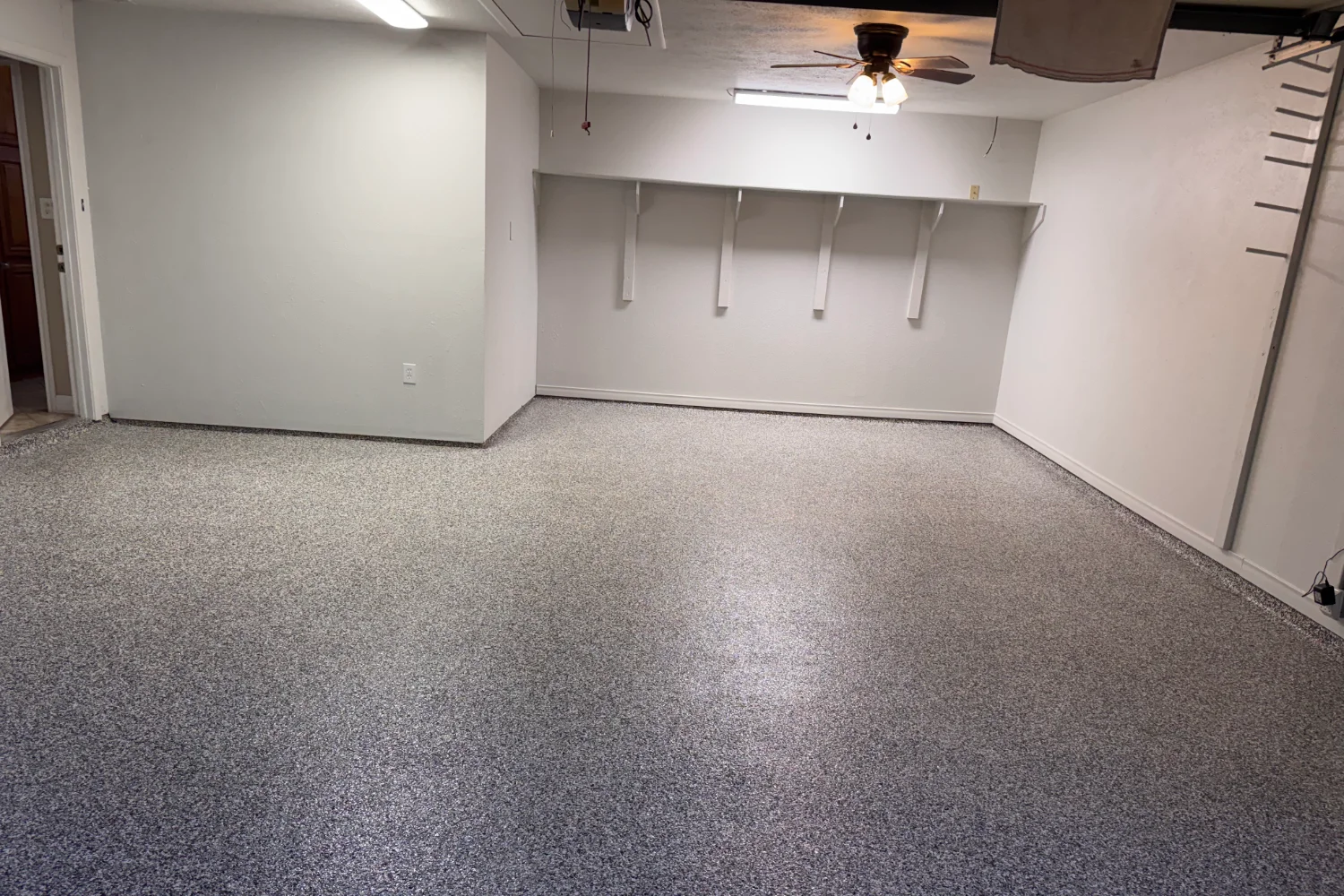
A common professional approach uses an epoxy-based layer over prepared concrete followed by decorative material and a polyaspartic protective topcoat.
This type of system can combine the bonding and build characteristics of epoxy with the UV stability and abrasion resistance of polyaspartic.
Prados Concrete Coatings currently uses an industrial-grade base coat combined with a UV-stable polyaspartic topcoat on its Dallas garage floor systems.
This creates a complete coating system rather than relying on a single layer of material.
Which Coating Is Better for Texas Heat
North Texas summers create demanding conditions for garage floors.
High temperatures, warm vehicle tires and sunlight can expose weaknesses in improperly prepared or low-quality coatings.
Neither epoxy nor polyaspartic should be evaluated independently from surface preparation.
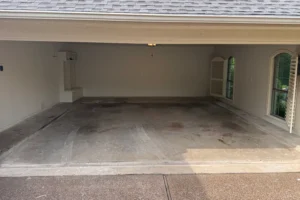
A premium coating applied over contaminated or poorly prepared concrete can still fail.
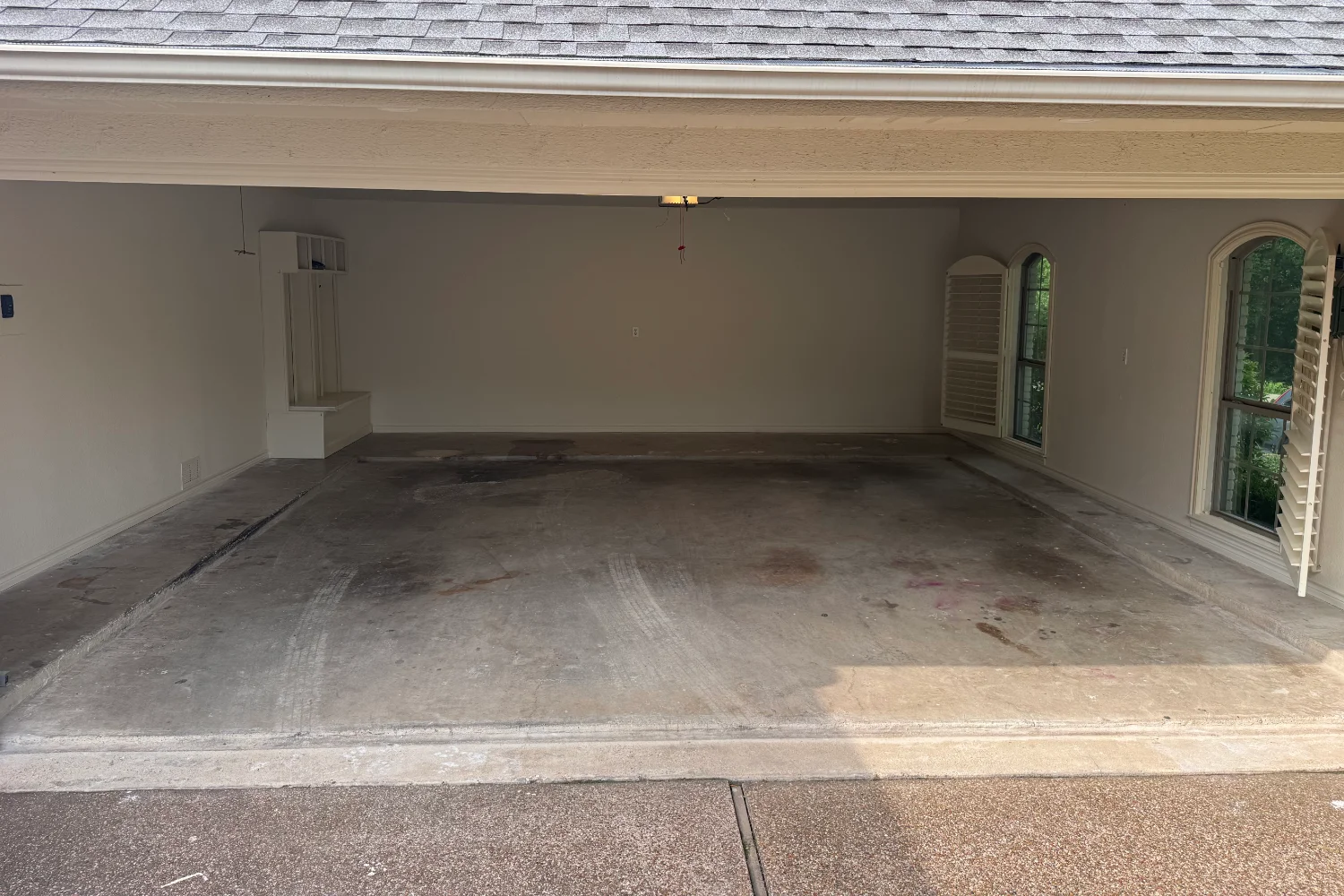
The existing concrete should be evaluated for:
- Oil contamination
- Cracks
- Moisture
- Previous paint or coatings
- Surface deterioration
- Pitting
- Existing repairs
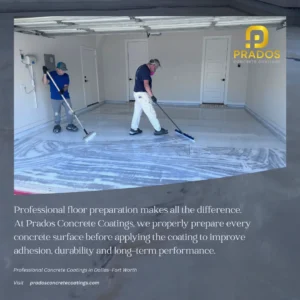
Mechanical preparation creates the surface profile necessary for the coating to bond effectively.
For homeowners comparing garage floor coatings in Plano, asking how the concrete will be prepared is just as important as asking what coating will be installed.
Epoxy vs Polyaspartic for Hot Tire Pickup
Hot tire pickup occurs when a coating loses adhesion beneath vehicle tires.
As tires heat during driving, they can place additional stress on the coating after the vehicle is parked.
Improper preparation is one of the major reasons garage floor coatings peel.
The complete system must therefore be designed for vehicle traffic and properly bonded to the slab.
A high-performance topcoat can provide additional resistance, but it cannot compensate for poor concrete preparation underneath.
Which Garage Floor Coating Looks Better
Both epoxy and polyaspartic systems can create attractive floors.
The visual result depends more on the complete decorative system than on the name of a single resin.
Garage floors can include:
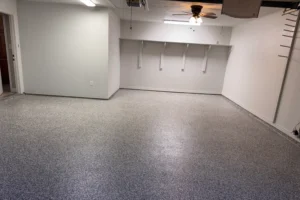
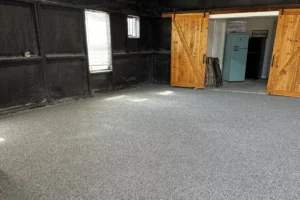
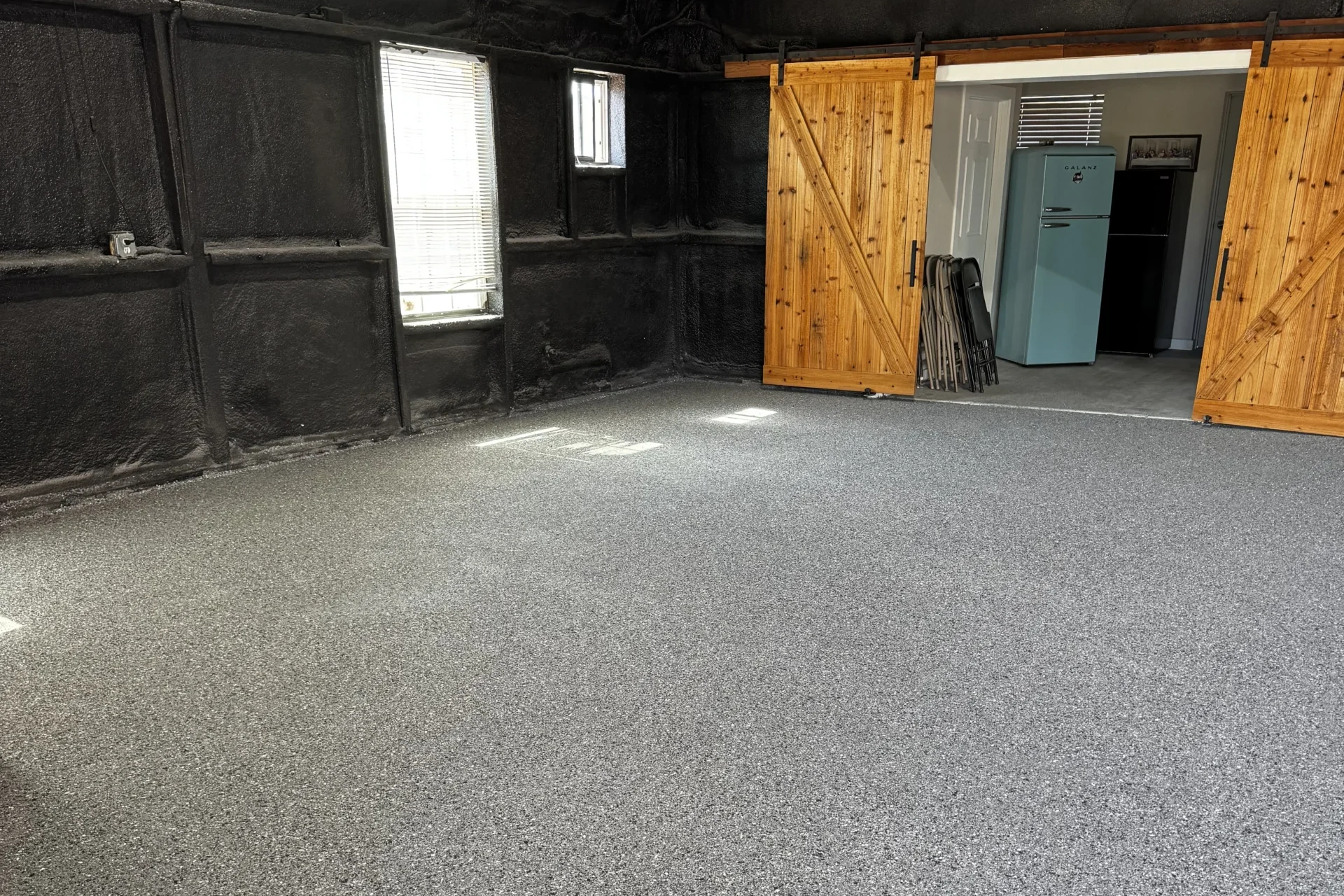
- Decorative flakes
- Solid colors
- Quartz finishes
- Metallic finishes
- Custom color combinations
Prados offers a range of garage floor color and finish options that allow homeowners to select a style that complements their property.
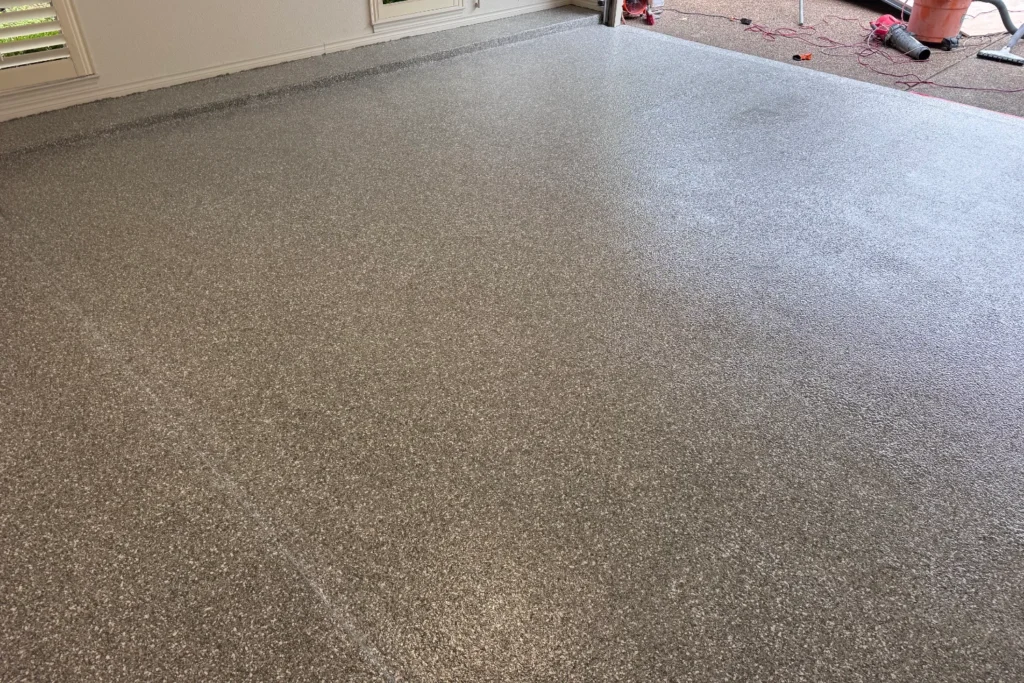
Decorative flakes are particularly popular in residential garages because they can create texture and help visually disguise dirt, minor debris and everyday wear.
Is Polyaspartic More Expensive Than Epoxy
Polyaspartic systems can cost more than basic epoxy installations because of material costs, performance characteristics and the specific coating system being installed.
However, comparing coatings only by price per square foot can be misleading.
One contractor may quote a basic epoxy coating, while another quote may include:
- Diamond grinding
- Crack repair
- Base coat
- Full flake broadcast
- Protective polyaspartic topcoat
- Edge preparation
- Surface repairs
Those are not equivalent projects.
When comparing estimates, homeowners should request a clear explanation of what each flooring system includes.
Epoxy vs Polyaspartic Maintenance
Both professionally installed systems can be relatively easy to maintain compared with bare concrete.
A sealed coating prevents many contaminants from penetrating directly into the porous concrete underneath.
Routine maintenance generally includes removing loose dirt and cleaning spills before they accumulate.
Harsh abrasive cleaning methods are usually unnecessary for normal residential maintenance.
A professionally coated garage can therefore be easier to maintain than unfinished concrete.
Is Epoxy or Polyaspartic Better for a Residential Garage
For most homeowners, there is no reason to approach the decision as epoxy versus polyaspartic in absolute terms.
The more important considerations are:
- Concrete preparation
- Quality of materials
- Correct installation
- UV resistance
- Chemical resistance
- Vehicle traffic
- Desired appearance
- Existing slab condition
A combination system can often provide the advantages homeowners expect from both materials.
The same approach can also be adapted to other residential concrete surfaces. Homeowners considering broader improvements can explore residential epoxy flooring in Fort Worth for garages, workshops, patios and other appropriate areas.
Professional Epoxy and Polyaspartic Garage Floors in Dallas Fort Worth
The best garage floor coating is not determined by one product name.
It is the result of selecting the correct materials, properly preparing the concrete and installing the complete system correctly.
Prados Concrete Coatings installs professional garage floor systems throughout Dallas and the DFW area using concrete preparation, high-performance coating materials and protective polyaspartic topcoats.
If you are comparing epoxy and polyaspartic flooring for your garage, start by having the concrete evaluated.
Explore our garage epoxy floor coating services in Dallas to learn more or request an estimate for your property.
Frequently Asked Questions About Epoxy and Polyaspartic Floors
Is polyaspartic better than epoxy for garage floors
Polyaspartic offers advantages such as faster curing and better UV stability, while epoxy can provide strong adhesion and build as part of a complete coating system. Many professional garage floors combine both technologies.
Does polyaspartic turn yellow in the sun
Polyaspartic coatings are commonly selected because of their UV stability and resistance to yellowing, making them useful for garages exposed to Texas sunlight.
Can epoxy and polyaspartic be used together
Yes. A flooring system can use an epoxy-based coat with a polyaspartic protective topcoat to combine characteristics of both materials.
Which coating is better for hot tires
Performance depends heavily on surface preparation, adhesion and the complete flooring system. A properly installed professional coating is better suited to vehicle traffic than inexpensive paint or poorly prepared DIY coatings.
How do I choose between epoxy and polyaspartic in Dallas
Consider concrete condition, UV exposure, traffic, desired finish, preparation method and the complete coating system rather than choosing only by product name.