Epoxy garage floors are designed to create a durable, attractive and easy-to-maintain surface, but not every installation performs the same way.
Peeling, bubbling and delamination are some of the most common problems homeowners experience with poorly installed garage floor coatings.
In Texas, high temperatures, moisture, hot vehicle tires and changing conditions can make installation quality even more important.
When an epoxy garage floor starts separating from the concrete, the coating itself is not always the real problem. In many cases, the failure begins underneath the coating because the concrete was not prepared correctly before installation.
Understanding why garage floor coatings fail can help Dallas–Fort Worth homeowners avoid costly repairs and choose a professional flooring system from the beginning.
What Causes Epoxy Garage Floors to Peel?
Peeling occurs when the coating loses adhesion to the concrete underneath.
Once adhesion begins to fail, small sections can gradually become larger areas of loose or detached coating.
The most common causes include:
- Poor surface preparation
- Oil contamination
- Moisture in the concrete
- Existing coatings left underneath
- Incorrect installation conditions
- Weak or deteriorated concrete
- Improper curing
- Low-quality coating materials
A professionally installed garage epoxy floor in Dallas should begin with a detailed evaluation of the concrete rather than simply applying a coating over the existing surface.
Poor Surface Preparation Is One of the Biggest Causes
Concrete may look clean while still being unsuitable for coating.
The surface contains pores, contaminants and imperfections that can prevent proper adhesion.
Simply sweeping the garage or washing it with detergent does not normally create the profile required for a professional coating system.
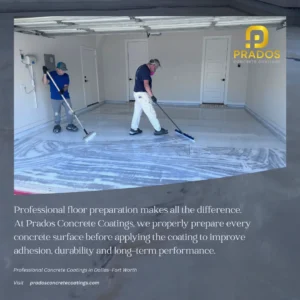
Mechanical surface preparation is commonly used to remove contaminants and open the concrete so the coating can bond correctly.
Diamond grinding is one of the methods used to create this surface profile.
Why Acid Etching May Not Be Enough
Some DIY garage floor kits recommend acid etching instead of mechanical preparation.
Although etching can alter the concrete surface, it may not remove old coatings, deeply embedded contamination or certain weak layers of concrete.
Professional preparation allows the installer to evaluate the slab and mechanically remove problematic material before applying the coating.
For homeowners considering garage floor coatings in Plano, asking how the contractor prepares the concrete should be one of the first questions before hiring.
Oil and Automotive Fluids Can Cause Adhesion Problems
Garages naturally accumulate automotive contaminants.
Oil, transmission fluid, brake fluid and other substances can penetrate untreated concrete.
Cleaning the visible stain does not always mean the contamination has been completely removed.
If oil remains inside the concrete, it can interfere with the coating’s ability to bond.
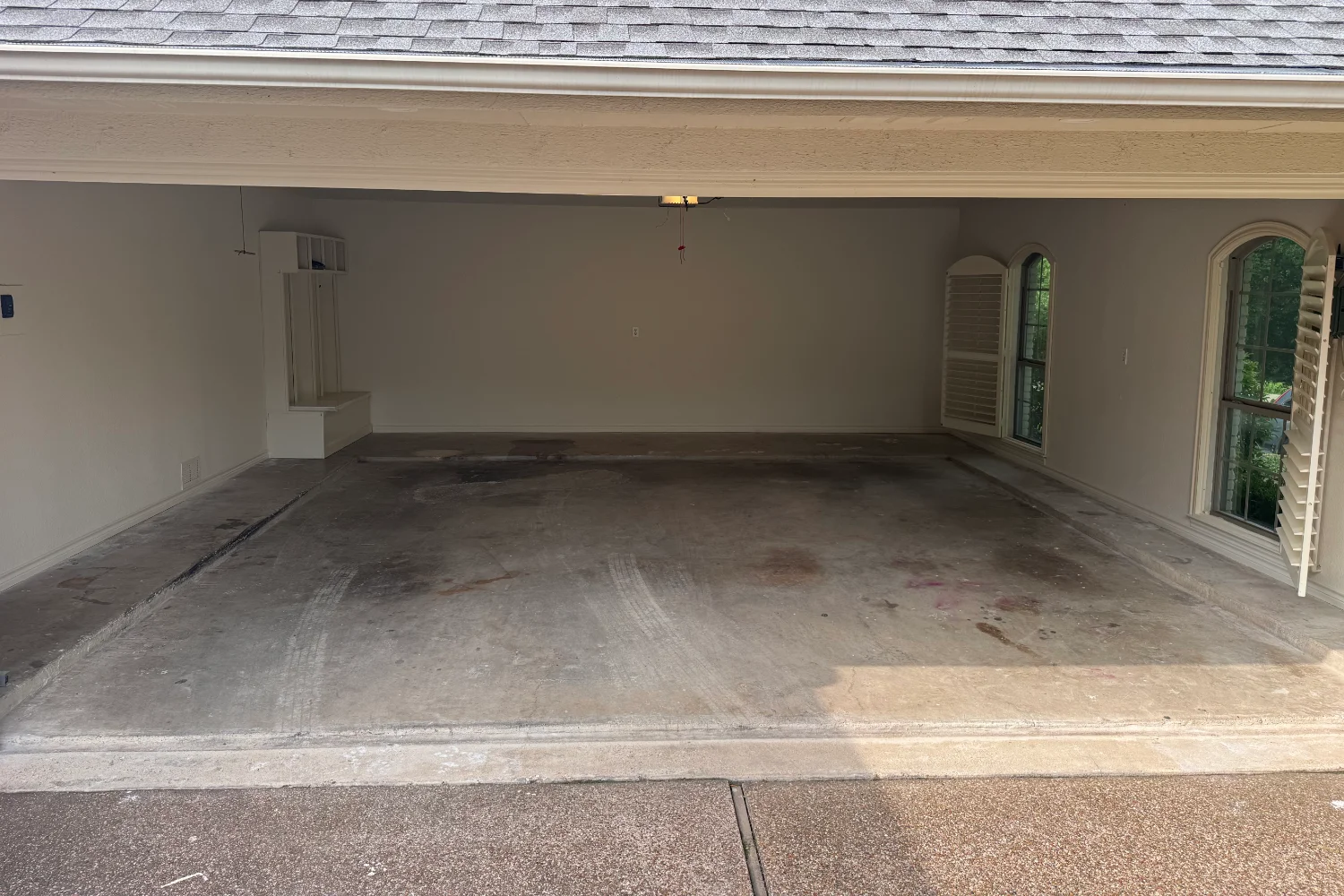
Older garages that have been used for vehicle maintenance may require additional preparation before installing epoxy.
This is another reason an inspection should take place before determining the appropriate coating system.
Why Epoxy Garage Floors Bubble
Bubbles can appear when air, moisture or vapor becomes trapped beneath or inside the coating.
Small bubbles may create an uneven appearance, while larger bubbles can eventually lead to coating failure.
Potential causes include:
- Moisture vapor moving through concrete
- Air escaping from porous concrete
- Improper mixing
- Incorrect application
- Excessive coating thickness
- Environmental conditions during installation
Bubbling should not simply be treated as a cosmetic problem.
The installer needs to determine what caused the bubbles before applying another layer.
Moisture Can Cause Garage Floor Coating Failure
Concrete may appear dry from the surface while still containing moisture.
Moisture vapor can move upward through concrete slabs.
When a coating creates a barrier over the surface, excessive moisture pressure can contribute to adhesion problems or blistering.
Texas garages can experience moisture from several sources, including:
- Ground moisture
- Plumbing problems
- Water entering through garage doors
- Previous flooding
- Washing vehicles inside the garage
- Humidity
When there are signs of moisture problems, the slab should be evaluated before coating installation.
Installing a coating over an unresolved moisture problem can lead to failure regardless of the quality of the coating material.
What Is Epoxy Floor Delamination?
Delamination occurs when the coating separates from the surface underneath.
The floor may initially look normal before sections begin lifting or producing a hollow sound.
Eventually, pieces of coating may detach completely.
Delamination is usually related to a failure in adhesion.
Common causes include poor preparation, contamination, moisture and applying new material over an incompatible existing coating.
Homeowners researching garage epoxy flooring in Arlington should look for contractors that address the concrete first instead of treating installation as simply painting a garage floor.
Hot Tires Can Expose Weak Coatings
Texas heat creates another challenge for garage floors.
Vehicle tires become hot while driving on roads during summer.
When the vehicle enters the garage, the warm tires rest directly on the coating.
A weakly bonded floor may begin lifting underneath the tires.
This problem is commonly referred to as hot tire pickup.
The risk is greater when:
- Concrete preparation was inadequate
- Low-quality coating was used
- The floor did not cure properly
- Contamination remained underneath
- The coating system was not suitable for vehicle traffic
The solution is not simply choosing the thickest coating.
Adhesion and installation quality are critical.
Can Texas Heat Make Epoxy Peel?
Heat by itself does not automatically cause a professionally installed epoxy floor to peel.
However, Texas conditions can increase stress on an improperly installed floor.
Garages in Dallas–Fort Worth experience high temperatures, hot tires and repeated temperature changes.
These conditions can expose installation weaknesses more quickly.
A complete system designed for garage use should account for these conditions.
Professional systems may combine a durable base coat with a UV-stable polyaspartic protective topcoat.
Why Existing Paint Should Be Removed
Many older garages contain painted floors or previous DIY epoxy coatings.
Applying a new coating directly over these surfaces creates an important risk.
Even if the new coating bonds strongly to the old paint, the entire flooring system can still fail if the old paint loses adhesion to the concrete.
For this reason, weak or incompatible existing coatings usually need to be removed.
The goal is to create a strong bond directly with properly prepared concrete.
Can a Peeling Epoxy Garage Floor Be Repaired?
Yes, but the appropriate repair depends on the extent and cause of the failure.
A small isolated defect may require localized repair.
Widespread peeling or delamination often requires removing much of the existing coating.
Before installing a new system, the contractor should identify why the previous floor failed.
Simply applying another coating over a failed surface can hide the problem temporarily without solving it.
How to Prevent Epoxy Garage Floor Failure
The most effective way to prevent peeling, bubbling and delamination is to focus on the installation process.
A professional project should consider:
Concrete Inspection
The slab should be checked for cracks, contamination, moisture and existing coatings.
Mechanical Preparation
Concrete should receive the appropriate surface preparation before coating installation.
Concrete Repairs
Cracks, pits and damaged areas should be repaired when necessary.
Correct Coating System
The flooring system should match how the garage will be used.
Proper Installation and Curing
Materials must be mixed, applied and allowed to cure according to their specifications.
Skipping any of these steps can compromise the finished floor.
Professional Garage Floor Coatings in Dallas Fort Worth
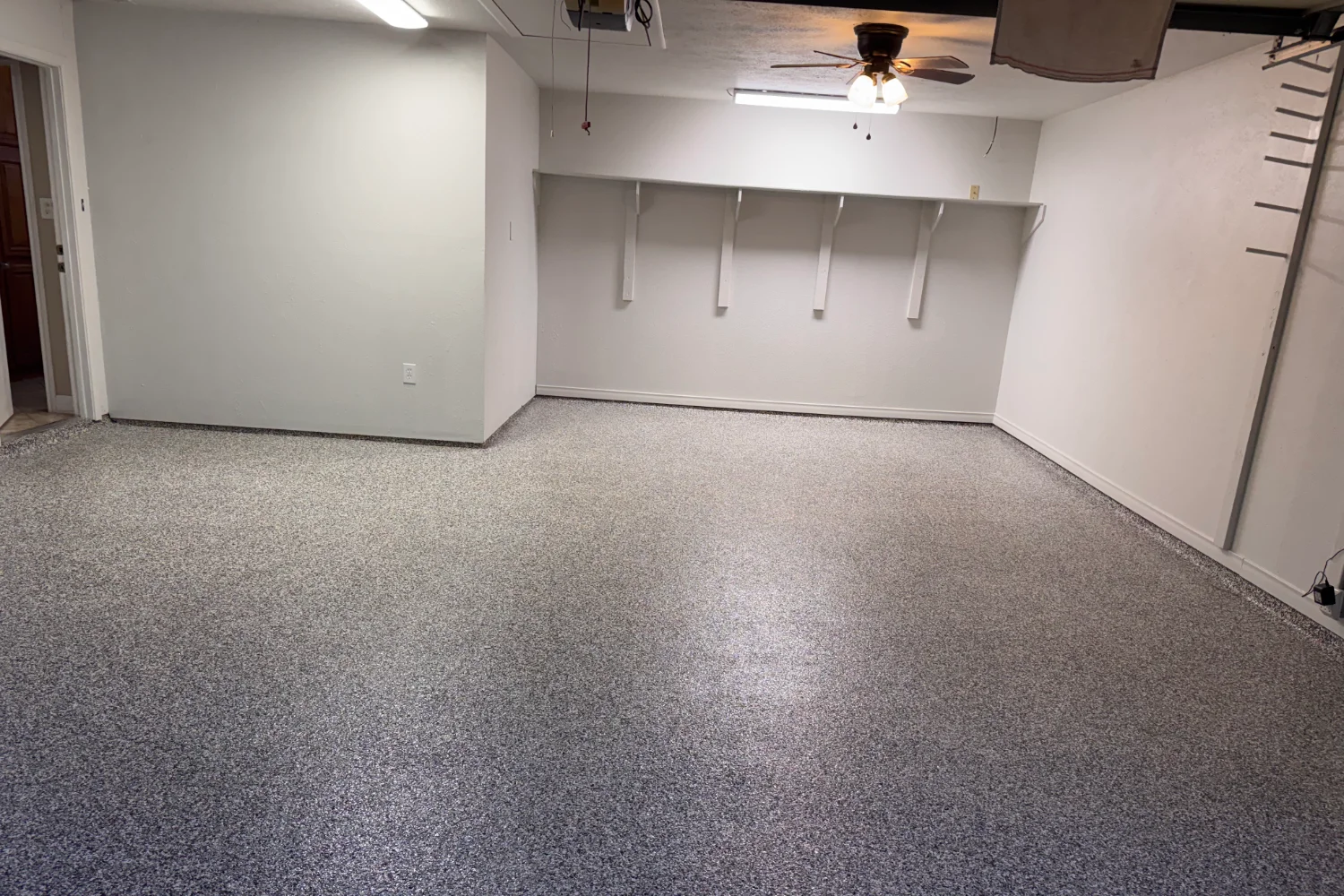
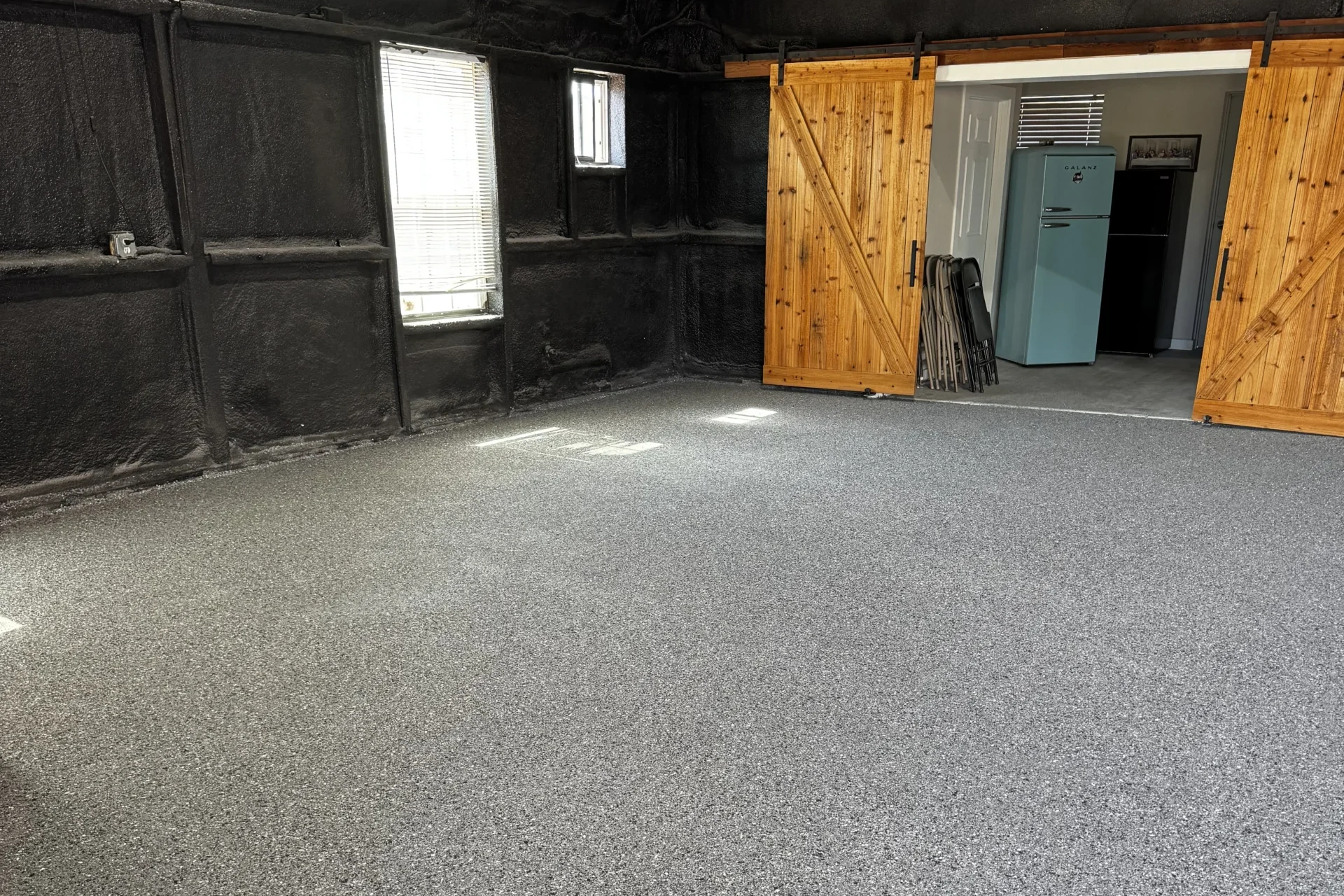
A garage floor coating should protect concrete and improve the appearance of the space for years.
Peeling, bubbling and delamination are not simply normal characteristics that homeowners should expect immediately after installation.
In many cases, these problems point to preparation, moisture or installation issues.
Prados Concrete Coatings installs professional garage coating systems throughout Dallas and the DFW area with an emphasis on concrete preparation and appropriate coating materials.
If your existing coating is peeling or you want to avoid these problems on a new project, explore our garage floor coating services in Dallas and request an evaluation of your concrete.
Frequently Asked Questions About Epoxy Floor Failure
Why is my epoxy garage floor peeling?
Peeling is commonly caused by poor concrete preparation, contamination, moisture, weak existing coatings or improper installation.
Can hot tires make epoxy peel?
Hot tires can expose weaknesses in poorly bonded coatings. Proper preparation and a flooring system designed for vehicle traffic help reduce this risk.
Why are bubbles appearing in my epoxy floor?
Bubbles can result from trapped air, moisture vapor, concrete outgassing or application problems.
Can you coat over peeling epoxy?
Generally, failed material should be removed before installing a new coating. Applying another layer over a poorly bonded floor can lead to additional failure.
How can I prevent epoxy floor delamination?
Proper concrete inspection, mechanical preparation, repairs and professional installation are the most important steps for preventing delamination.