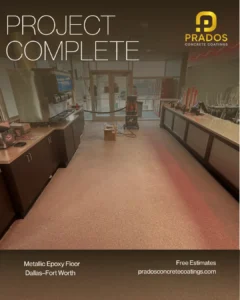
Metallic epoxy flooring has become a popular option for homeowners and businesses that want more than a basic concrete coating. Its distinctive patterns, high-gloss appearance, and custom finish can transform garages, showrooms, offices, retail spaces, and residential interiors.
However, metallic epoxy is not the right choice for every project.
Before choosing metallic epoxy flooring in Dallas, it is important to understand its advantages, limitations, maintenance needs, and how it compares with other coating systems.
What Is Metallic Epoxy Flooring?
Metallic epoxy is a decorative flooring system that combines epoxy resin with metallic pigments to create depth, movement, and visual variation across the surface.
Depending on the colors and application technique, the finished floor can resemble marble, flowing metal, clouds, stone, or abstract patterns.
One of its defining characteristics is that no two metallic epoxy floors look exactly the same. The movement of the pigments creates a customized appearance that cannot always be duplicated precisely.
What Are the Pros of Metallic Epoxy Flooring?
Unique and Custom Appearance
The biggest advantage of metallic epoxy is its visual impact.
Unlike a standard solid-color coating, metallic pigments create depth and movement throughout the floor. This makes the system particularly attractive for spaces where design matters.
It can work especially well in:
- Luxury garages
- Showrooms
- Retail stores
- Offices
- Salons
- Restaurants
- Residential interiors
Seamless Surface
Metallic epoxy creates a continuous floor without the visible grout lines associated with tile.
This seamless appearance can make a room look larger, cleaner, and more modern.
Durable Concrete Protection
Metallic epoxy is not only decorative. When installed as part of a professional coating system, it also helps protect the underlying concrete against normal wear, stains, and daily use.
The overall durability depends on surface preparation, coating layers, installation quality, and the protective topcoat.
Easy-to-Clean Finish
Because the surface is seamless, dirt and spills do not collect in grout lines.
Routine cleaning is generally straightforward, making metallic epoxy practical for both residential and commercial environments.
What Are the Cons of Metallic Epoxy Flooring?
Higher Cost Than Basic Finishes
Metallic epoxy can cost more than simpler solid-color or Flake systems.
The additional investment may come from specialized pigments, decorative application techniques, customization, and the extra attention required to create the final pattern.
For homeowners focused primarily on function rather than appearance, a simpler finish may offer better value.
Installation Requires Experience
Metallic epoxy is highly dependent on application technique.
The installer controls how the pigments move, blend, and interact across the floor. Small differences in application can significantly change the final appearance.
For this reason, metallic systems generally require more experience than a straightforward coating.
Every Floor Looks Different
The uniqueness of metallic epoxy can also be a disadvantage.
If you find a specific photo online, the finished floor can often be inspired by that design, but an exact duplicate may not be realistic.
Homeowners should choose metallic epoxy because they want a customized appearance rather than an identical copy of another installation.
Glossy Floors Can Show Dirt More Easily
Some highly reflective finishes can make dust, footprints, or surface imperfections more noticeable.
Color choice and finish level can influence how much routine dirt is visible.
Is Metallic Epoxy Slippery?
The slip characteristics of metallic epoxy depend on the final coating system and surface texture.
A highly smooth, glossy floor may feel different from a textured Flake or Quartz system, particularly when wet.
The appropriate finish should therefore be selected based on how the space will be used.
For areas where additional surface texture is important, another coating system may be more appropriate.
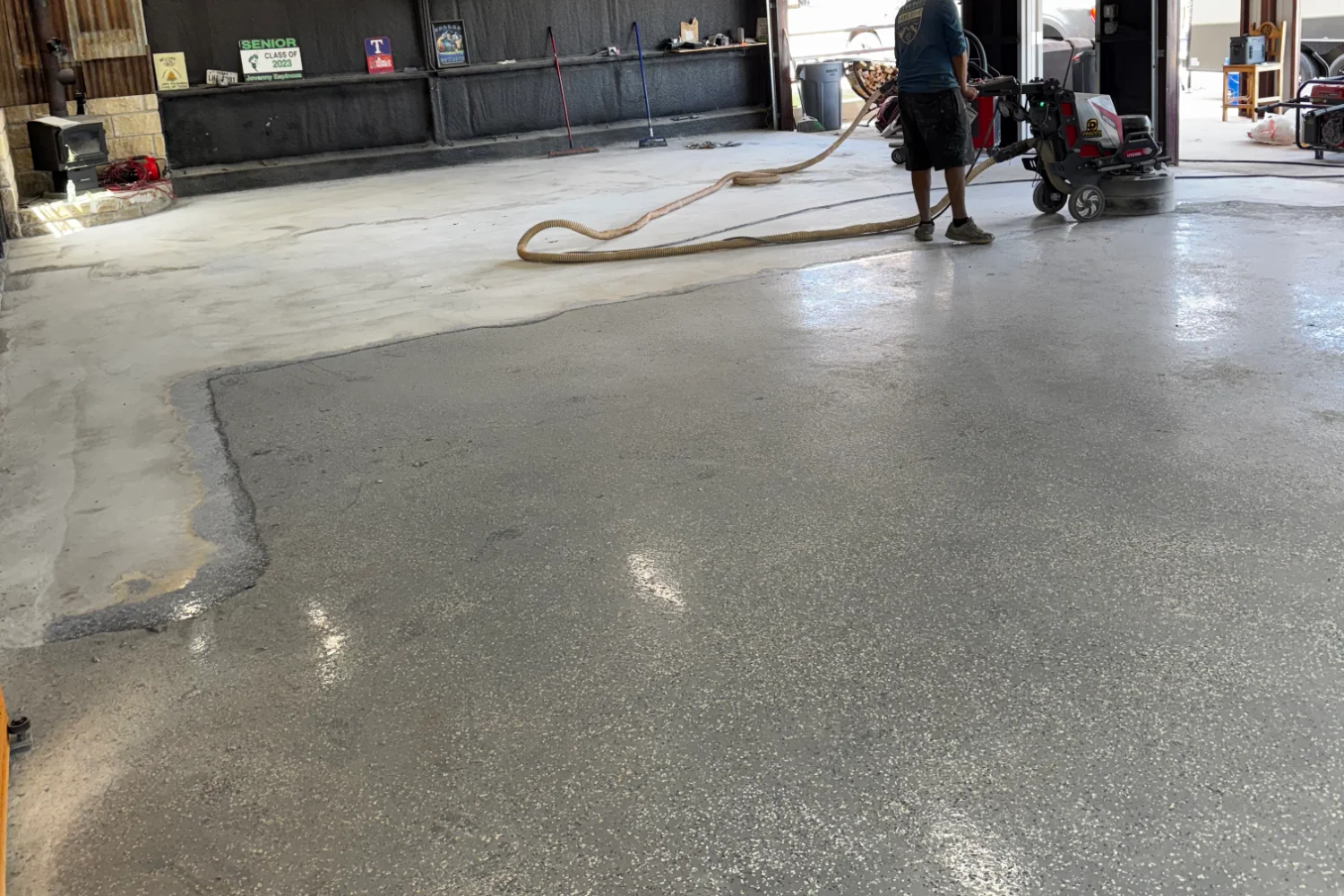
Metallic Epoxy vs Flake Epoxy
Both systems can protect concrete, but they serve different design priorities.
Choose Metallic for Visual Impact
Metallic epoxy is usually the stronger choice when the priority is:
- Luxury appearance
- Custom patterns
- High-gloss finish
- Showroom-style design
Choose Flake for a More Textured Look
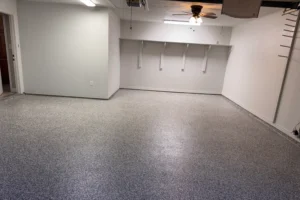
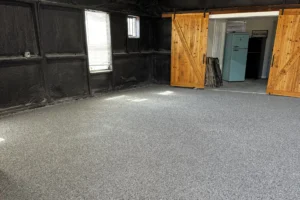
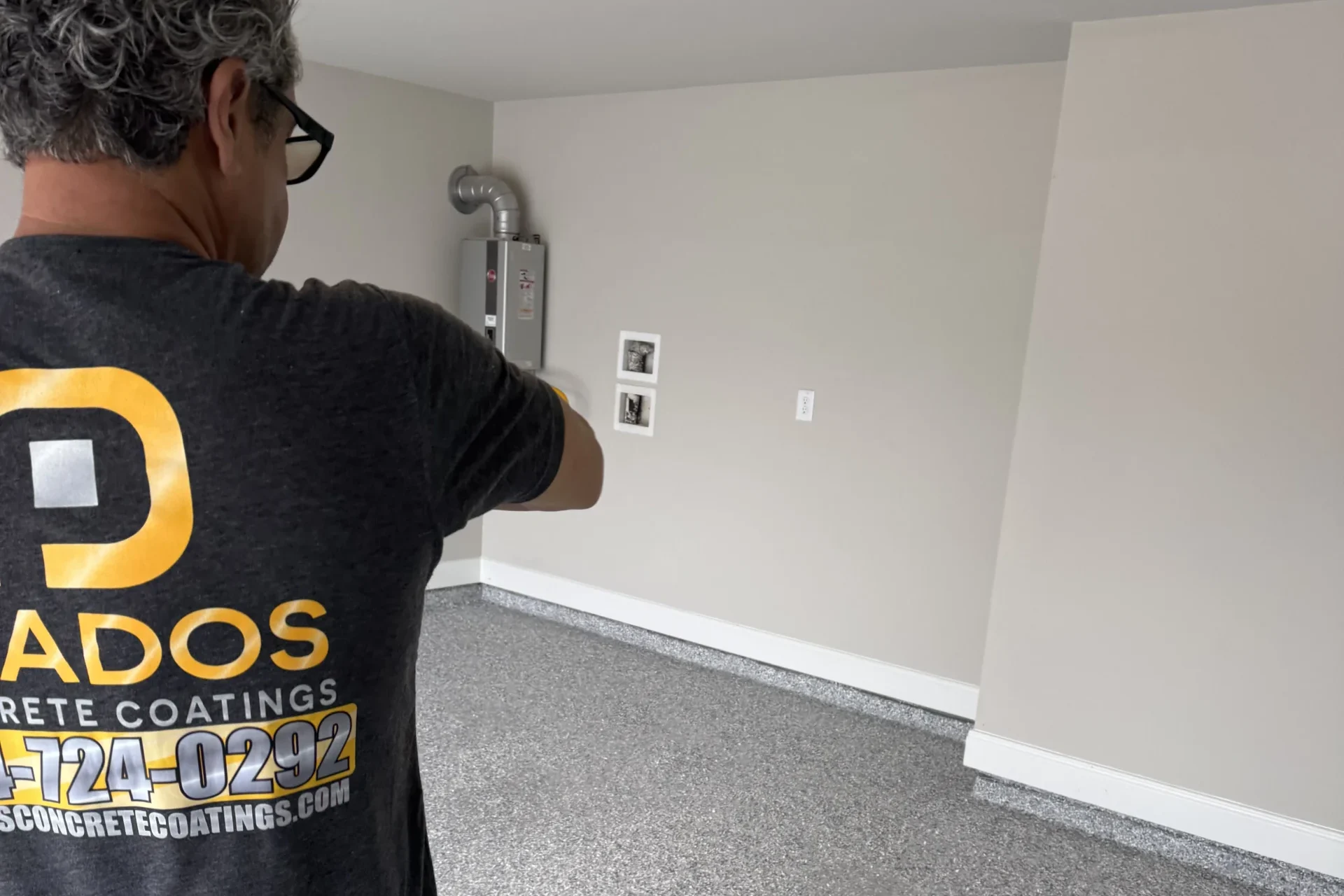
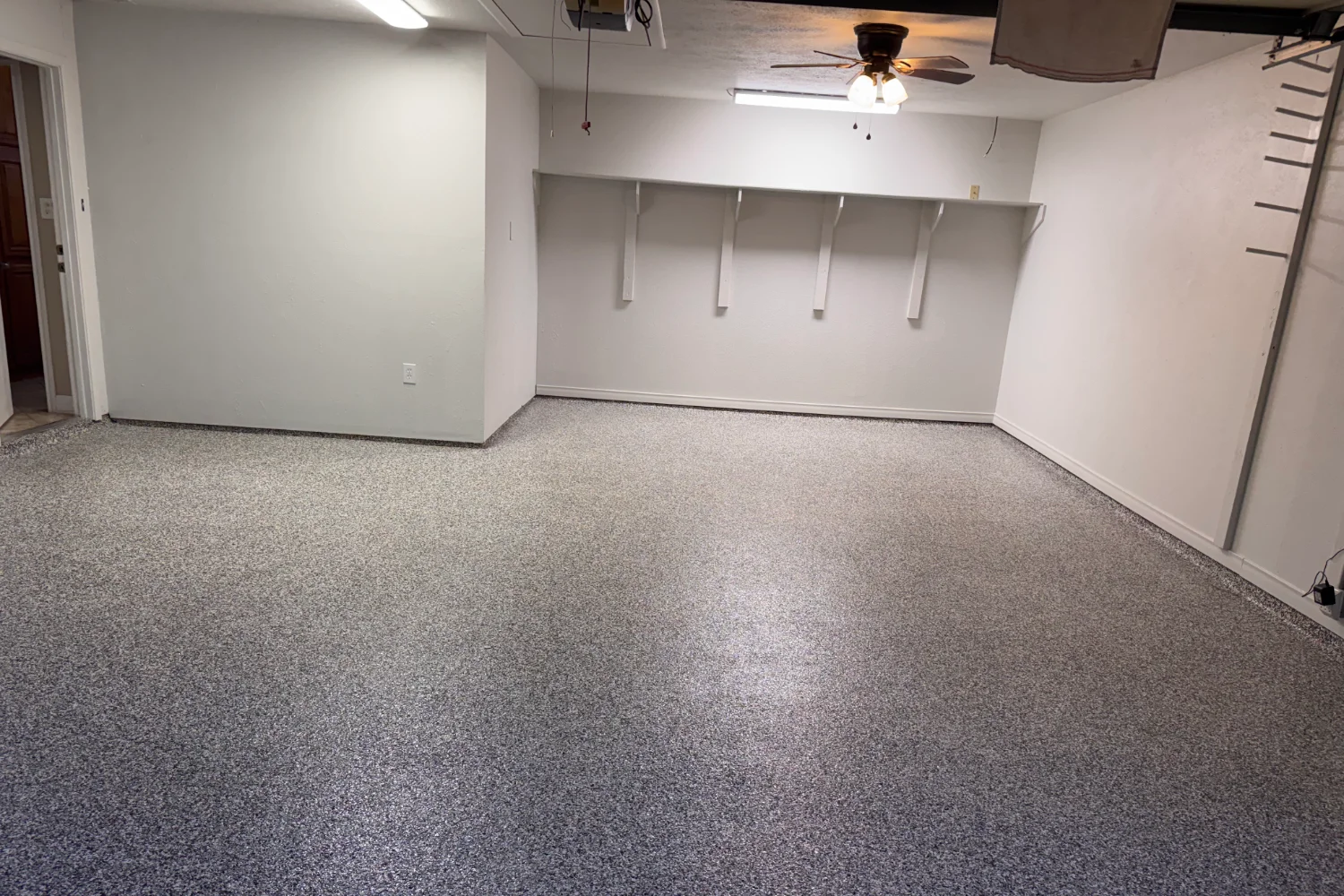
Flake systems create a more uniform, textured appearance and can help disguise dust, dirt, and minor visual imperfections.
Prados offers multiple Flake, Quartz, and Metallic epoxy color options for different residential and commercial applications.
Is Metallic Epoxy Good for Garage Floors?
Yes. Metallic epoxy can work very well in garages, especially when homeowners want the space to look more like a showroom than a traditional utility area.
It can be a strong option for:
- Collector-car garages
- Luxury garages
- Custom workshops
- Entertainment garages
- Showroom-style spaces
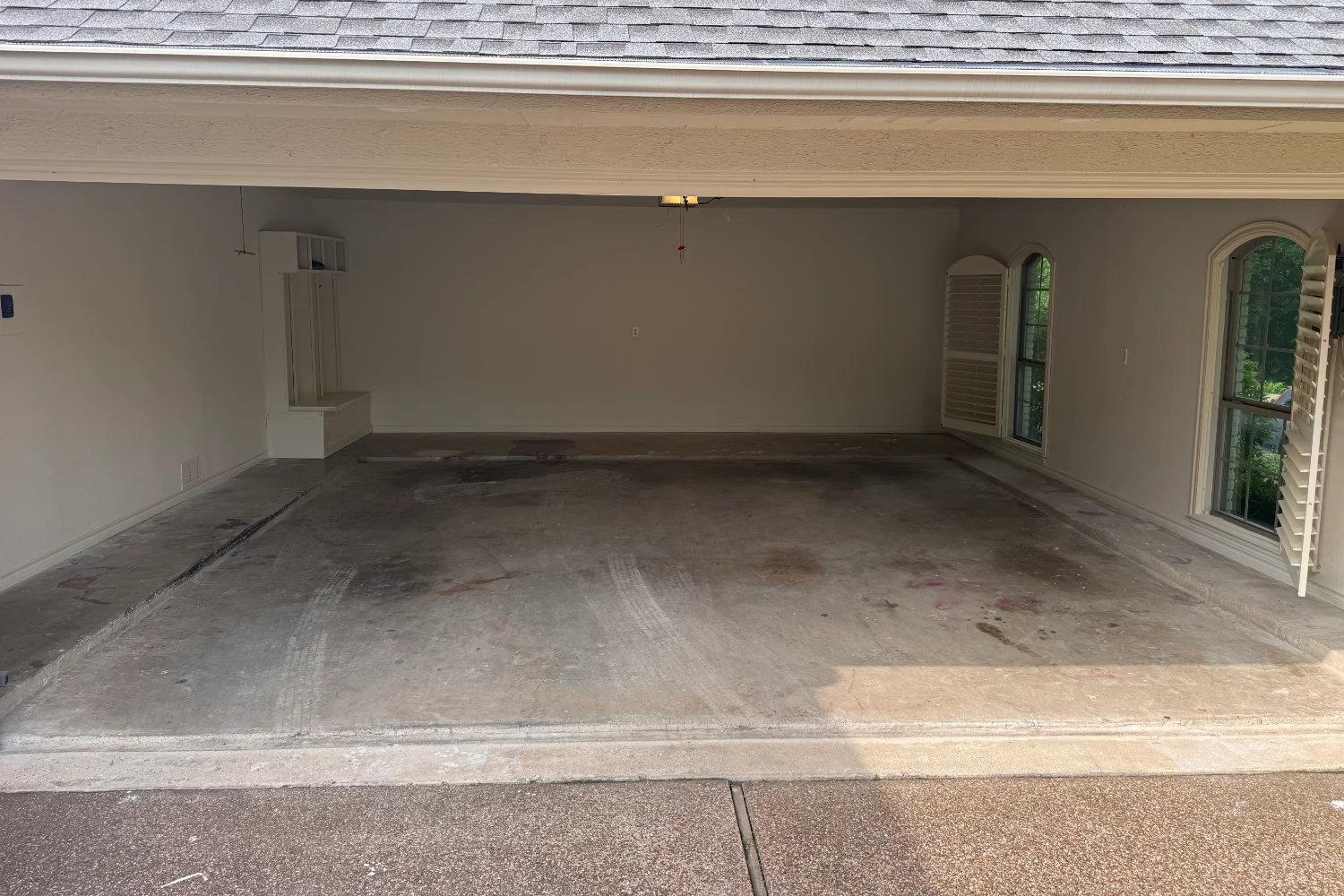
However, vehicle traffic, hot tires, concrete preparation, and the final protective topcoat still need to be considered.
Homeowners can compare additional options for garage epoxy flooring in Dallas.
Is Metallic Epoxy Good for Commercial Spaces?
Metallic epoxy can also be effective in businesses where flooring contributes to the customer experience.
Retail stores, salons, offices, restaurants, showrooms, and hospitality environments may benefit from a floor that combines durability with a distinctive visual identity.
For higher-traffic environments, the coating system should be selected around the expected use of the space.
Prados also provides commercial epoxy flooring in Dallas for businesses with different performance and design requirements.
Does Metallic Epoxy Handle Texas Heat and UV Exposure?
The metallic appearance itself is only one part of the flooring system.
For areas exposed to sunlight, UV resistance and the protective topcoat become especially important.
A properly designed system can use epoxy for adhesion and decorative depth while adding a protective topcoat suited to exposure and wear.
Homeowners can learn more about epoxy flooring in extreme Texas heat.
How Long Does Metallic Epoxy Flooring Last?
There is no universal lifespan for every metallic epoxy floor.
Durability depends on:
- Surface preparation
- Coating system
- Installation quality
- Traffic
- UV exposure
- Cleaning and maintenance
A properly installed floor can provide long-term performance, but the condition of the concrete and preparation remain critical.
You can also review how long an epoxy floor can last.
Is Metallic Epoxy Flooring Worth It?
Metallic epoxy can be worth the investment when appearance and customization are just as important as protecting the concrete.
It is particularly suitable for homeowners and businesses that want a distinctive, high-end finish.
If the main priority is simply creating a practical garage surface, a Flake or solid-color system may be more appropriate.
The best choice depends on the space, budget, traffic, maintenance expectations, and desired appearance.
Get a Metallic Epoxy Flooring Estimate in Dallas
Prados Concrete Coatings provides custom metallic epoxy systems for residential and commercial spaces throughout Dallas and the DFW area.
You can request a metallic epoxy flooring estimate in Dallas to evaluate your concrete, discuss design options, and choose the most appropriate coating system.
Frequently Asked Questions
Is metallic epoxy more expensive than regular epoxy?
It can be, especially when the project requires customized pigments, decorative effects, or additional design work.
Is metallic epoxy good for garages?
Yes, particularly for homeowners who want a customized or showroom-style garage floor.
Does metallic epoxy scratch easily?
Performance depends on the coating system, protective topcoat, traffic, and maintenance.
Can metallic epoxy be used commercially?
Yes. It can work well in retail, showrooms, salons, offices, restaurants, and other visually focused commercial spaces.
Is metallic epoxy worth the money?
It can be a strong investment when unique design, customization, and concrete protection are priorities.