Choosing the best flooring for a warehouse with forklift traffic requires more than selecting a surface that looks durable. Warehouse floors must withstand concentrated wheel loads, turning pressure, abrasion, impacts, spills, chemicals, and constant equipment movement.
For many commercial and industrial facilities, a professionally installed epoxy coating system can provide a strong balance of durability, concrete protection, easier maintenance, and long-term performance.
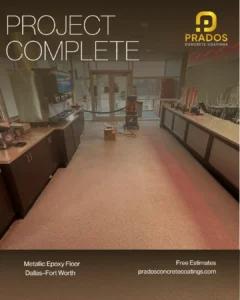
Prados Concrete Coatings provides commercial epoxy flooring in Dallas for warehouses and other high-traffic business environments throughout the DFW area.
What Is the Best Flooring for Warehouses With Forklift Traffic?
There is no single flooring system that works perfectly for every warehouse.
The best option depends on:
- Forklift frequency
- Equipment weight
- Concrete condition
- Chemical exposure
- Cleaning requirements
- Slip-resistance needs
- Operating hours
- Expected downtime
For many facilities, industrial-grade epoxy flooring with an appropriate protective topcoat can be an effective solution because it creates a seamless surface designed to protect the concrete underneath.
What Does Forklift Traffic Do to Warehouse Floors?
Forklifts place very different demands on flooring than normal pedestrian traffic.
Concentrated Wheel Loads
A forklift transfers significant weight through relatively small wheel contact areas.
Repeated movement over the same aisles can gradually wear down weak concrete or unsuitable coatings.
Turning and Braking Wear
Warehouse intersections, loading areas, and tight turns often experience more abrasion than straight travel lanes.
Forklift tires create additional friction when equipment turns, accelerates, or brakes repeatedly.
Impacts From Equipment and Materials
Pallets, tools, equipment, and products may occasionally be dropped onto the floor.
The flooring system must therefore handle more than wheel traffic alone.
Oil and Chemical Exposure
Warehouses may also experience hydraulic fluids, oils, cleaning chemicals, and other spills.
A floor that absorbs these substances can become harder to clean and maintain over time.
Is Epoxy Flooring Good for Warehouses?
Yes, when the system is properly specified for the facility.
Commercial epoxy can create a seamless protective surface over prepared concrete and may offer advantages such as:
- Abrasion resistance
- Stain resistance
- Easier cleaning
- Chemical resistance
- Customizable finishes
- Improved concrete protection
However, not every epoxy product is suitable for forklift traffic.
The coating system, surface preparation, thickness, protective layers, and expected warehouse use all matter.
Can Epoxy Flooring Handle Forklifts?
A properly installed commercial epoxy system can be designed for warehouses where forklifts, pallet jacks, carts, and other equipment operate regularly.
The important word is system.
The floor should not be evaluated only by whether the product is called epoxy. The complete installation may include concrete preparation, repairs, an industrial epoxy base, additional build layers, and a protective topcoat selected for abrasion and traffic.
Epoxy and Polyaspartic Systems for Heavy Traffic
Different coating materials can perform different roles.
Epoxy Base Coat
An epoxy base can provide strong adhesion to properly prepared concrete and build a durable protective layer.
Protective Topcoat
A protective topcoat can add resistance against abrasion, stains, chemicals, and daily warehouse wear.
This layered approach can provide more balanced performance than relying on a single coating layer.
What About Bare Concrete Warehouse Floors?
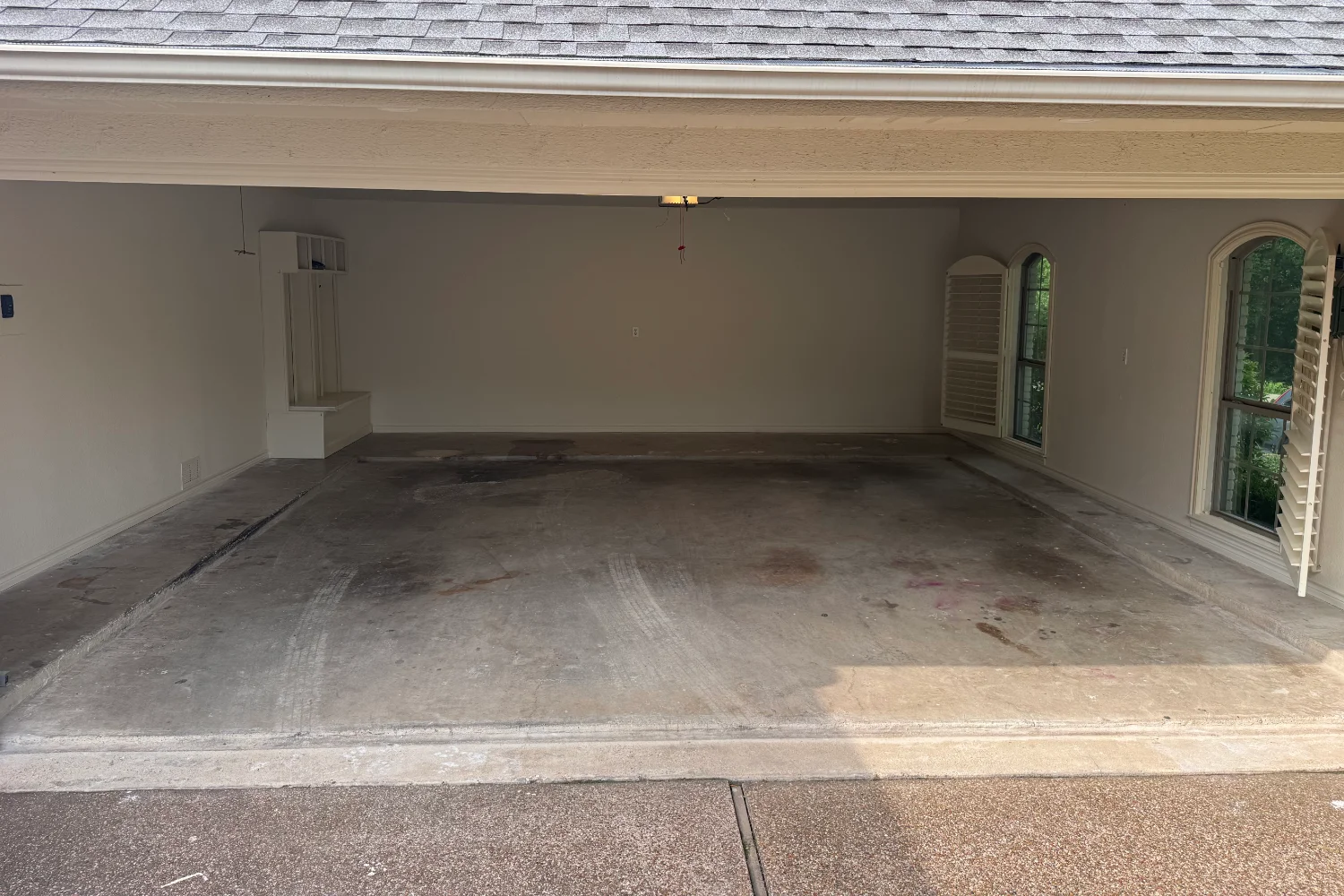
Bare concrete has one obvious advantage: lower initial cost.
However, untreated warehouse concrete may gradually develop:
- Dust
- Stains
- Tire marks
- Surface wear
- Difficult-to-clean areas
- Visible deterioration
In facilities with continuous operations, maintenance requirements can become an important part of the total flooring cost.
Polished Concrete vs Epoxy for Warehouses
Both options can work well, depending on the application.
When Polished Concrete Makes Sense
Polished concrete may be a good option when the slab is already in good condition and the facility wants a clean industrial appearance without applying a coating system.
When Epoxy Makes More Sense
Epoxy may be preferable when priorities include:
- Additional concrete protection
- Chemical resistance
- Custom colors
- Defined work zones
- Seamless appearance
- Easier stain management
The correct choice should reflect how the warehouse actually operates.
Why Surface Preparation Matters in a Warehouse
A large warehouse floor magnifies preparation mistakes.
Poor adhesion across hundreds or thousands of square feet can become a major operational problem.
Before coating, installers should evaluate:
- Cracks
- Damaged concrete
- Old coatings
- Oil contamination
- Moisture
- Surface strength
Mechanical grinding and proper surface profiling are especially important for creating a strong bond.
If you are concerned about coating failure, review what causes epoxy floors to peel.

Should Warehouse Flooring Be Slip-Resistant?
Slip resistance should be considered based on the environment.
Warehouses with wet areas, frequent spills, pedestrian traffic, loading zones, or cleaning operations may require more texture than a showroom or office floor.
The right surface should balance traction, cleanability, equipment movement, and maintenance.
Too much texture can make cleaning more difficult, while too little may not provide the grip required for certain areas.
Which Epoxy Finish Is Best for a Warehouse?
Flake Systems
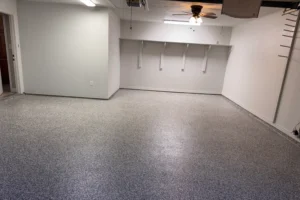
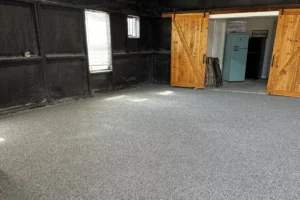
Flake systems can provide a textured appearance and help disguise dirt or minor visual imperfections.
Quartz Systems
Quartz can be a strong option where additional texture and durability are priorities.
Solid-Color Systems
Solid-color coatings can provide a clean industrial appearance and work well for facilities that want clearly defined operational zones.
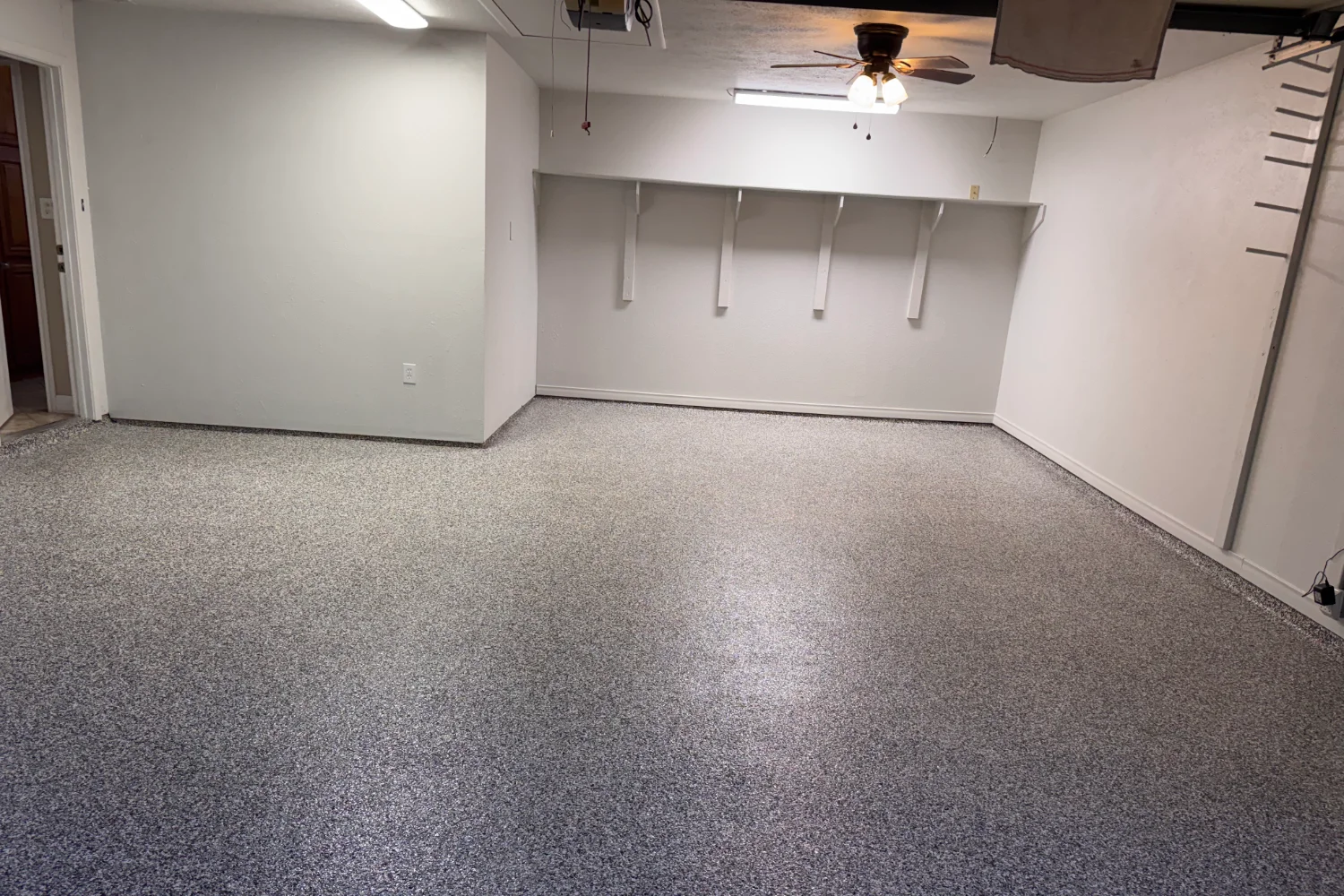
Prados offers several Flake, Quartz, and epoxy flooring options for different commercial applications.
Warehouse Flooring for Forklift Lanes and Work Zones
Not every part of a warehouse experiences the same traffic.
Different areas may include:
- Forklift aisles
- Loading zones
- Storage areas
- Pedestrian walkways
- Workstations
- Entrances
A well-planned flooring system should consider these differences rather than treating the entire building as one identical surface.
How to Choose Warehouse Flooring
Before selecting a system, evaluate:
- Forklift and equipment traffic
- Concrete condition
- Chemical exposure
- Cleaning requirements
- Slip-resistance needs
- Business downtime
- Maintenance expectations
The cheapest price per square foot is not always the lowest long-term cost.
Durability and maintenance should be considered alongside initial installation price.
How Long Does Warehouse Epoxy Flooring Last?
There is no universal lifespan for every commercial floor.
Performance depends on traffic levels, equipment weight, preparation quality, coating system, impacts, maintenance, and chemical exposure.
You can learn more about how long epoxy flooring can last.
Is Epoxy Flooring Worth It for a Warehouse?
Epoxy flooring can be a strong investment for facilities that prioritize concrete protection, easier maintenance, durability, and a professional appearance.
The most important factor is selecting a coating system based on the warehouse’s real operating conditions.
Warehouse Epoxy Flooring in Dallas
Prados Concrete Coatings installs commercial floor coating systems for warehouses and other high-traffic facilities throughout Dallas and DFW.
You can request a commercial floor coating estimate in Dallas to evaluate the concrete, equipment traffic, and performance requirements of your facility.
Frequently Asked Questions
Can epoxy floors handle forklift traffic?
Yes, when the coating system is properly designed and installed for commercial equipment traffic.
Is epoxy or polished concrete better for warehouses?
Both can work well. The best choice depends on traffic, chemical exposure, maintenance needs, and concrete condition.
Does forklift traffic damage epoxy flooring?
Heavy traffic can wear any flooring system over time, but properly specified commercial coatings are designed to handle demanding use.
Is warehouse epoxy flooring slip-resistant?
The level of texture and slip resistance depends on the selected system and finish.
How long does warehouse epoxy flooring last?
Lifespan varies based on preparation, traffic, equipment, maintenance, and the coating system used.