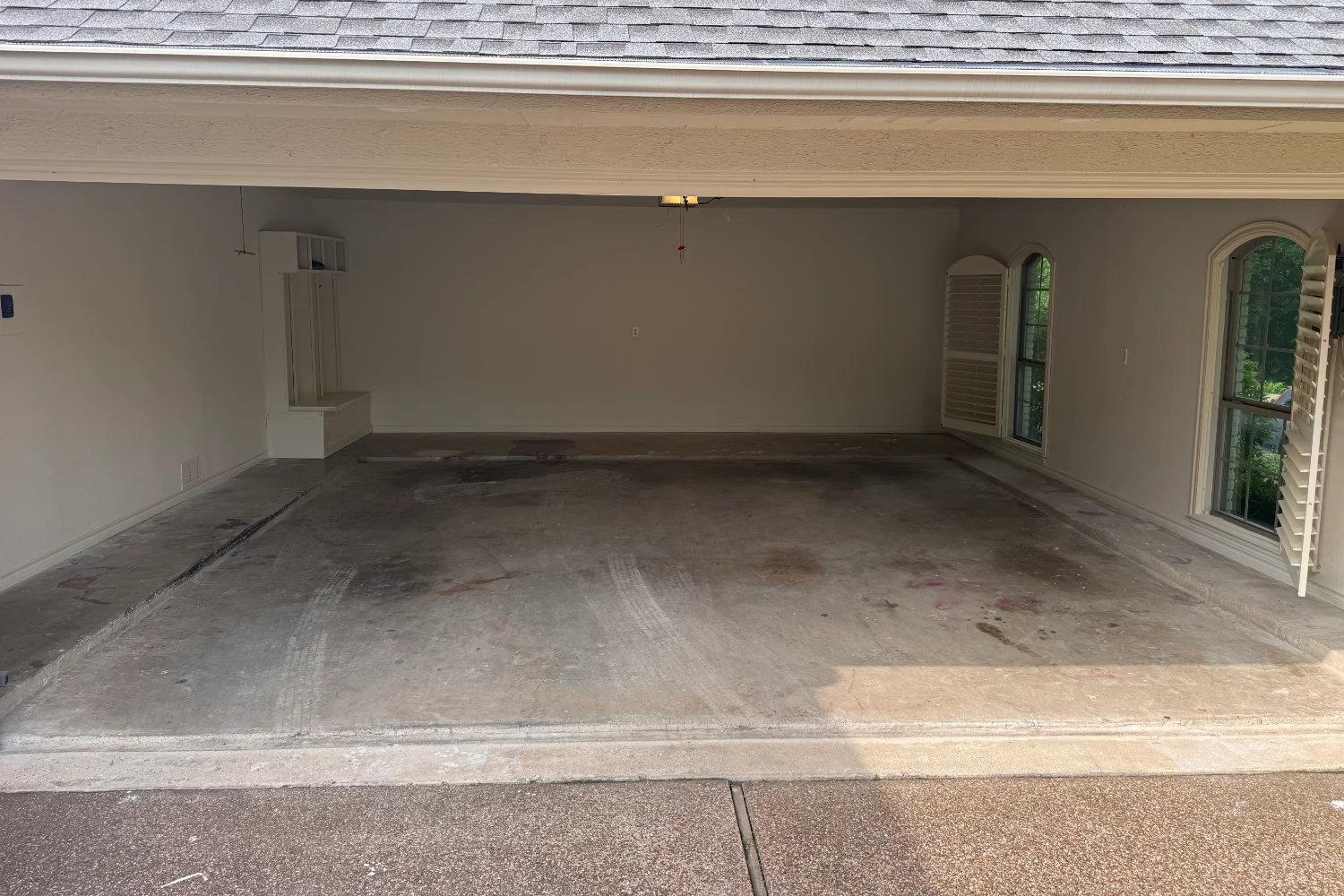
A DIY epoxy garage floor can look like an attractive option when the main goal is reducing upfront costs. Garage floor coating kits are widely available, and many homeowners assume the process is simply a matter of cleaning the concrete, mixing the product, and applying it.
In reality, the difference between a DIY project and a professional garage epoxy flooring installation in Dallas goes far beyond who applies the coating. Concrete preparation, coating quality, application technique, curing conditions, and the final protective system can all influence how the floor performs over time.
Understanding those differences can help you decide which option makes the most sense for your garage.
DIY Epoxy Garage Floor vs Professional Installation
The biggest advantage of DIY epoxy is usually the initial price. Homeowners can purchase a kit and complete much of the work themselves.
Professional installation costs more upfront because it typically includes specialized equipment, surface preparation, concrete repairs, professional coating materials, labor, and quality control.
The real comparison should therefore be based on total value, expected performance, and the risk of needing repairs or recoating later, rather than kit price alone.
What Is a DIY Epoxy Garage Floor?
A typical DIY project involves cleaning the concrete, repairing visible damage, preparing the surface, mixing the coating, applying it within the required working time, and allowing the floor to cure.
The process may sound straightforward, but epoxy application is sensitive to preparation, moisture, temperature, mixing ratios, and application timing.
What Does Professional Installation Include?
Professional installation normally begins with an evaluation of the existing concrete.
The process may include crack repair, contaminant removal, mechanical grinding, surface profiling, coating application, decorative flakes, and a protective topcoat.
Properly preparing a garage for epoxy floor installation is one of the most important steps in achieving reliable adhesion.
DIY Epoxy Is Cheaper Upfront, But What Does It Really Cost?
A garage floor kit may be inexpensive compared with professional installation, but the kit is not always the complete project cost.
Homeowners may also need surface preparation equipment, cleaning products, crack repair materials, application tools, protective equipment, and additional coating if coverage is lower than expected.
There is also the cost of correcting mistakes.
If a coating begins peeling or loses adhesion, removing it can require grinding the floor again before a new coating system can be installed.
A lower initial price does not necessarily mean a lower long-term cost.
Surface Preparation Is the Biggest Difference
One of the most common mistakes in DIY garage floor projects is treating cleaning and concrete preparation as the same thing.
They are not.
A floor can look clean while still having a surface that is unsuitable for proper coating adhesion.
Why Professional Concrete Grinding Matters
Mechanical grinding helps create a surface profile that allows the coating system to bond properly with the concrete.
It can also help remove weak surface material, previous coatings, and contaminants.
If the coating cannot establish a strong bond with the concrete, even a good product may eventually fail.
DIY Epoxy Kits vs Professional Coating Systems
Not all products sold as epoxy flooring provide the same performance.
Some DIY kits are designed around simplicity and ease of application, while professional systems can involve multiple layers and different coating technologies selected for the conditions of the floor.
This is especially important when comparing traditional epoxy with systems that incorporate a protective Polyaspartic layer.
Homeowners considering different materials can learn more about epoxy vs Polyaspartic garage floor coatings.
Which Option Lasts Longer?
There is no single lifespan that applies to every DIY or professional epoxy floor.
Durability depends on several factors, including:
- Concrete preparation
- Adhesion
- Moisture
- Coating system
- Vehicle traffic
- UV exposure
- Chemical exposure
- Maintenance
Professional installation can reduce many of the variables associated with surface preparation and application.
Understanding how long an epoxy floor can last also helps homeowners evaluate the project based on long-term performance instead of the initial price alone.
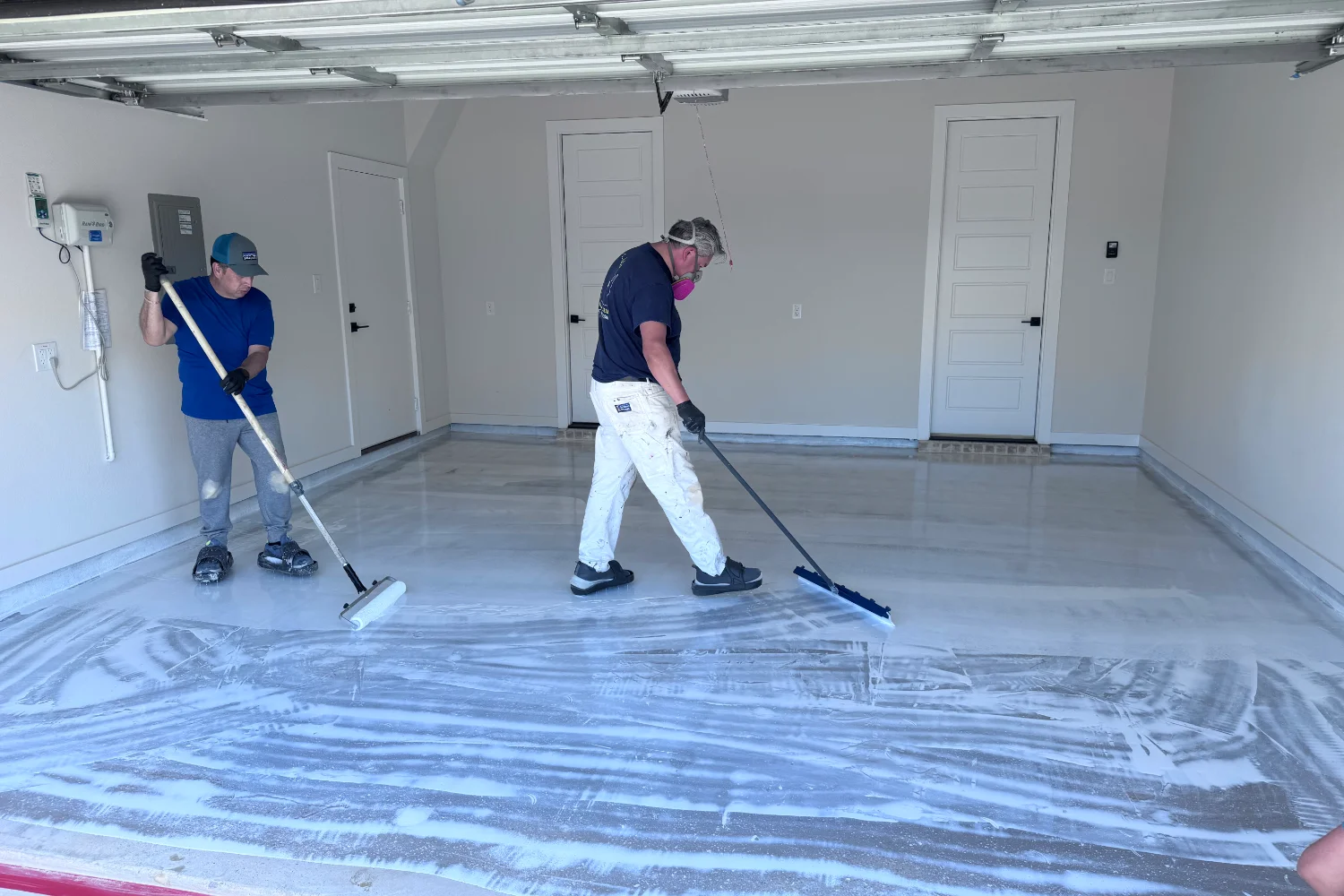
Can DIY Epoxy Handle Texas Heat and Hot Tires?
Dallas garages experience conditions that can be particularly demanding for floor coatings.
Vehicle tires can become extremely hot after driving on Texas roads, while garages may also experience high temperatures and UV exposure when doors remain open.
The ability of a floor to handle these conditions depends on the coating system, preparation, adhesion, and protective topcoat.
Prados has additional information about how epoxy flooring performs in extreme Texas heat.
DIY vs Professional Epoxy Appearance
Appearance is another important difference.
DIY installations can produce attractive results, especially when the floor is in excellent condition and the homeowner has experience with coating applications.
Professional installers, however, have more control over coverage, decorative flake distribution, edges, transitions, coating thickness, and final topcoat consistency.
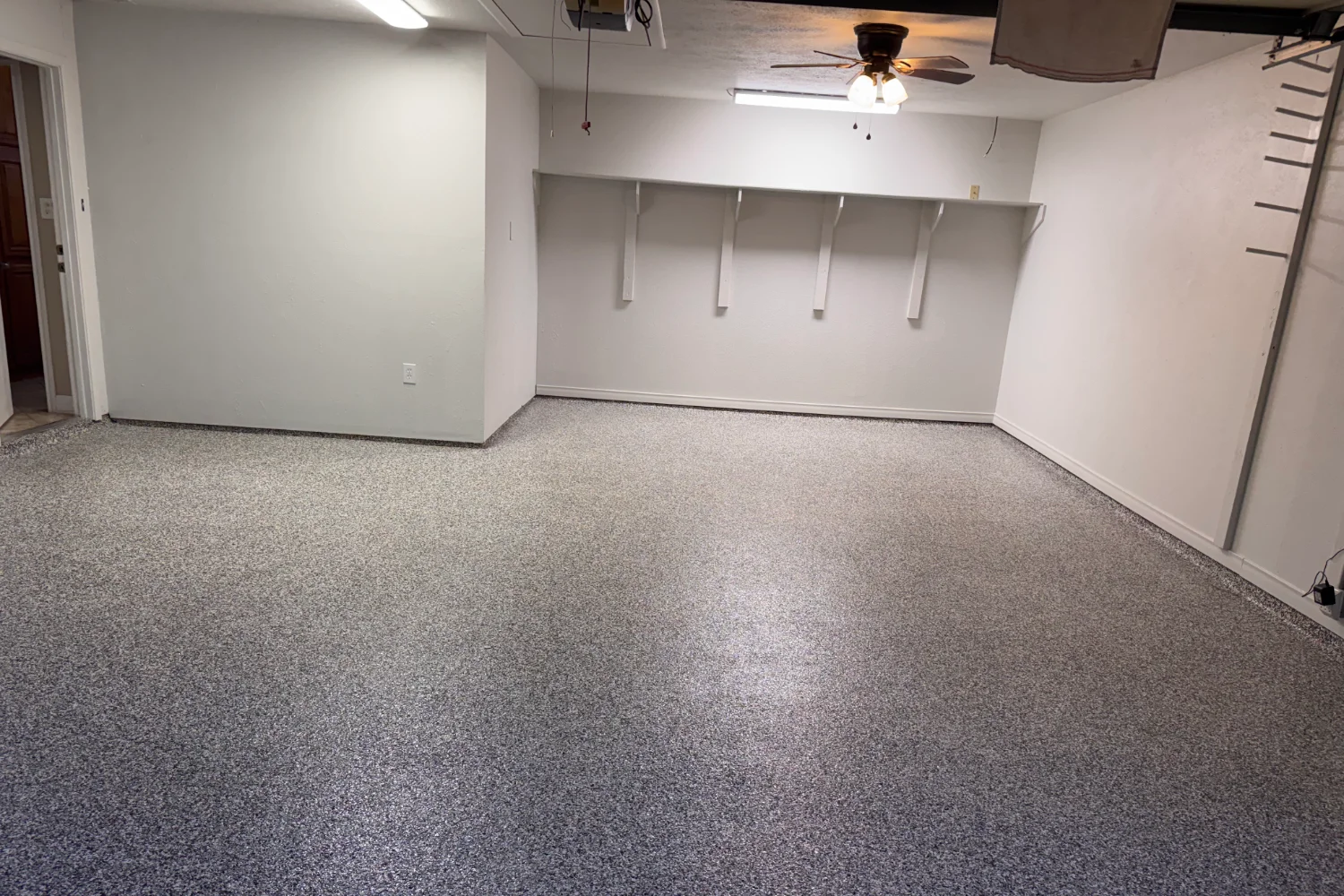
Homeowners looking for more customized designs can also explore Flake, Quartz and Metallic epoxy finishes.
When Does a DIY Epoxy Garage Floor Make Sense?
DIY epoxy may be reasonable when the garage is relatively small, the concrete is in good condition, and the homeowner understands the preparation and application requirements.
It can also make sense when the main priority is keeping the initial investment as low as possible.
However, homeowners should still follow the manufacturer’s surface preparation, mixing, application, and curing instructions carefully.
When Should You Hire a Professional?
Professional installation becomes more valuable when the floor has cracks, previous coatings, oil contamination, moisture concerns, or significant surface damage.
It can also be a better option when the homeowner expects a highly consistent decorative finish, regularly parks vehicles in the garage, or wants to minimize the risk of premature coating failure.
DIY Epoxy vs Professional Installation: Which Is Better?
DIY epoxy usually wins on initial cost. Professional installation generally offers advantages in preparation, application control, coating system selection, and predictable results.
The better choice depends on your concrete, budget, experience, and expectations.
If the garage floor is already damaged or you want a long-term coating system designed for Dallas conditions, professional installation may provide better overall value.
Get a Professional Garage Floor Estimate in Dallas
Every concrete floor is different, which is why the best way to compare DIY and professional options is to understand what your garage actually needs.
Prados Concrete Coatings provides residential garage floor coating services throughout Dallas and the DFW area. You can request a free garage floor coating estimate in Dallas to evaluate the condition of your concrete and determine the most appropriate coating system.
Frequently Asked Questions
Is DIY garage floor epoxy worth it?
It can be worthwhile for homeowners with concrete in good condition who are comfortable handling the preparation and application process.
Why does DIY epoxy peel?
Peeling can result from inadequate surface preparation, contamination, moisture, poor adhesion, incorrect application, or curing problems.
Is professional epoxy better than a garage floor kit?
Professional systems often provide more extensive surface preparation and coating options, but the best choice depends on the condition of the floor and the homeowner’s expectations.
Do you need to grind concrete before applying epoxy?
Mechanical grinding is commonly used in professional installations because it helps create the surface profile needed for strong coating adhesion.
Can DIY epoxy withstand hot tires?
Performance varies by product and installation quality. The coating system, concrete preparation, curing, and garage conditions all matter.
Is professional garage floor coating worth the money?
For homeowners who prioritize durability, consistent appearance, professional preparation, and reduced installation risk, professional coating can provide greater long-term value.