Yes, epoxy can often be installed over cracked concrete, but the cracks should usually be inspected and repaired before the coating is applied.
Applying epoxy directly over damaged concrete without proper preparation can lead to visible crack lines, poor adhesion, moisture problems, or premature coating failure. The key is understanding what caused the crack, how severe it is, and whether the concrete is stable enough to receive a coating system.
For homeowners considering professional garage epoxy flooring in Dallas, proper concrete preparation is one of the most important parts of the installation.
Can You Epoxy Over Cracked Concrete?
In many cases, yes.
Small, stable cracks can often be repaired before installing epoxy or another professional concrete coating. However, larger cracks, recurring cracks, or damage caused by structural movement may require additional evaluation.
The important distinction is that epoxy is a floor coating, not a structural repair system.
Before coating cracked concrete, a professional should evaluate:
- Crack size
- Crack depth
- Concrete movement
- Moisture
- Surface damage
- Previous repairs
- Existing coatings
Once these conditions are understood, the concrete can be prepared appropriately.
Why Does Concrete Crack?
Concrete is extremely durable, but cracking is common over time.
Concrete Shrinkage and Aging
Concrete naturally changes as it cures and ages. Small hairline cracks may appear without indicating serious structural damage.
Settlement and Movement
Ground movement or settlement beneath the slab can create larger cracks. These areas require closer inspection because the concrete may continue moving after the coating is installed.
Temperature and Moisture
Temperature changes and moisture can also contribute to movement within concrete surfaces.
This is particularly important in garages, patios, and other areas exposed to changing environmental conditions.
Should Concrete Cracks Be Repaired Before Epoxy?
In most professional installations, cracks and damaged areas should be treated before the coating system is applied.
Simply coating over a crack does not repair the underlying problem.
Why Covering a Crack Is Not the Same as Repairing It
A coating may temporarily make a crack less visible, but if the damaged area has not been prepared correctly, movement beneath the surface can eventually affect the coating.
Crack repair helps create a more stable and uniform surface before installation.
What Happens If Cracks Are Ignored?
Untreated damage can contribute to:
- Visible lines through the coating
- Poor adhesion
- Moisture intrusion
- Uneven appearance
- Premature coating failure
For this reason, concrete inspection should happen before the first coating layer is installed.
How Professionals Prepare Cracked Concrete for Epoxy
Professional installation normally involves more than filling visible cracks.
Inspect the Concrete
The first step is determining the condition of the slab.
Installers should evaluate cracks, moisture, contamination, previous coatings, damaged areas, and surface strength.
Repair Cracks and Surface Damage
Cracks and damaged sections can then be repaired using materials compatible with the selected coating system.
The repair method depends on the type and condition of the crack.
Mechanically Grind the Surface
After repairs, mechanical grinding can help create the surface profile needed for strong coating adhesion.
Homeowners can learn more about how to prepare a garage before epoxy installation.
Can Epoxy Hide Concrete Cracks?
Epoxy can create a smooth, attractive finish after proper repairs, but it should not be viewed as a way to simply hide damaged concrete.
A properly repaired hairline crack may become difficult to notice after coating. However, if the concrete continues moving, new cracks or visible lines may eventually appear.
Good preparation improves the result, but no coating can permanently stop structural movement inside a concrete slab.
What Types of Concrete Damage Need Extra Attention?
Hairline Cracks
Small hairline cracks are common and may be relatively straightforward to repair before coating.
Wide or Deep Cracks
Larger cracks require more careful evaluation because they may indicate significant movement or deterioration.
Pitting and Spalling
Concrete with pitting, flaking, or deteriorated surface areas may need additional preparation and repair.
If your garage shows these conditions, review the signs your garage floor may need an epoxy coating.
Moisture Around Cracks
Moisture can interfere with coating adhesion. A garage with recurring moisture problems should be evaluated before installation.
Can Epoxy Be Installed Over Old Concrete?
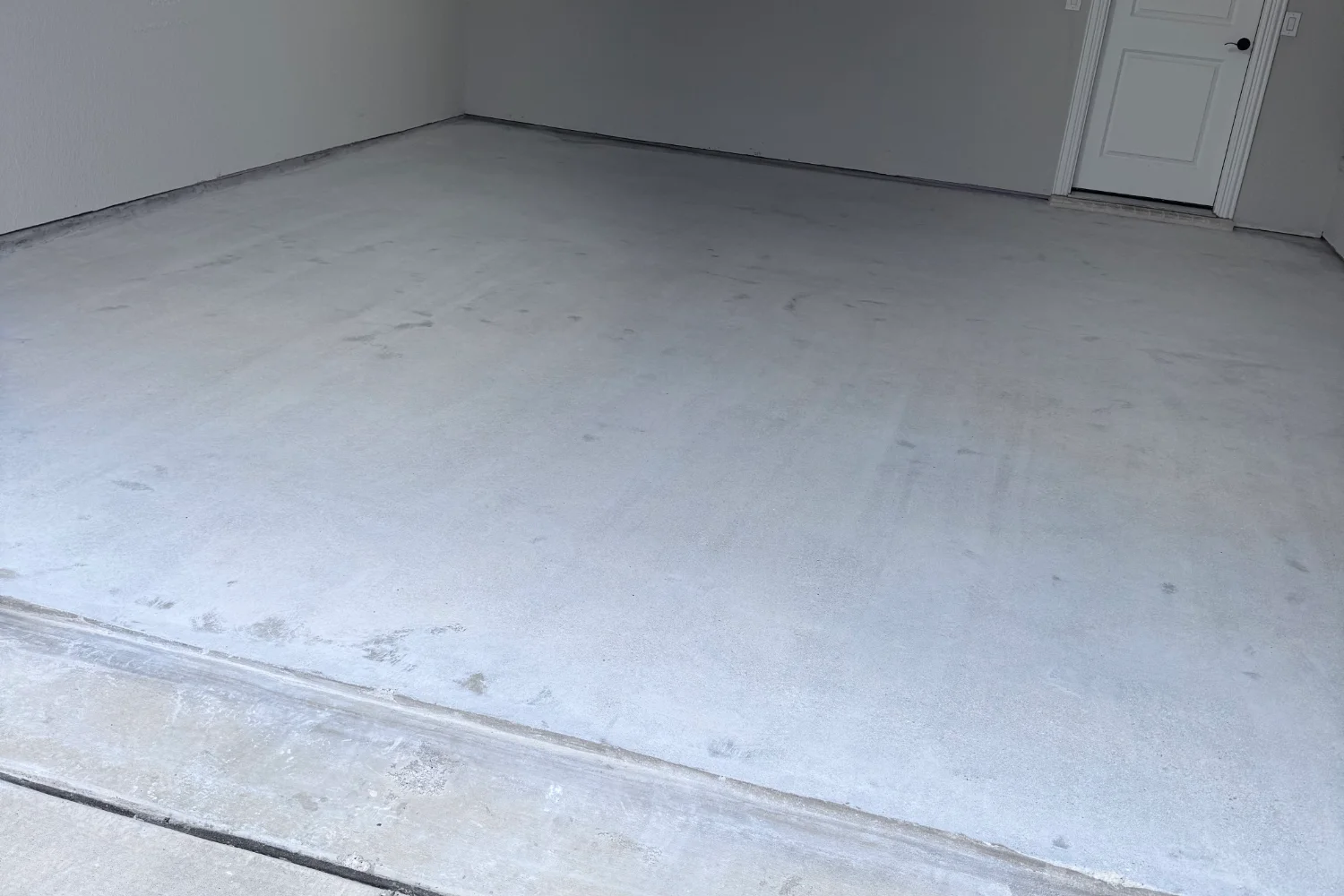
Yes. Old concrete can still be an excellent candidate for epoxy flooring if the slab is stable and properly prepared.
Age alone does not determine whether the concrete can be coated.
More important factors include:
- Surface condition
- Structural stability
- Moisture
- Previous coatings
- Contamination
- Required repairs
This is why an older garage floor should be inspected instead of automatically replaced.
Will Cracks Come Back Through an Epoxy Floor?
They can.
If the original crack continues moving, the movement may eventually transfer through the repaired area and affect the coating.
That does not mean every repaired crack will return. It simply means the performance of the floor depends partly on the stability of the concrete underneath it.
Does Cracked Concrete Affect Epoxy Floor Lifespan?
It can, especially when cracks or moisture issues are ignored before installation.
The lifespan of a coating depends on factors such as concrete preparation, repairs, adhesion, vehicle traffic, maintenance, and environmental exposure.
Understanding how long an epoxy floor can last can help homeowners see why preparation matters so much.
Is Cracked Concrete a Reason to Replace the Entire Floor?
Not necessarily.
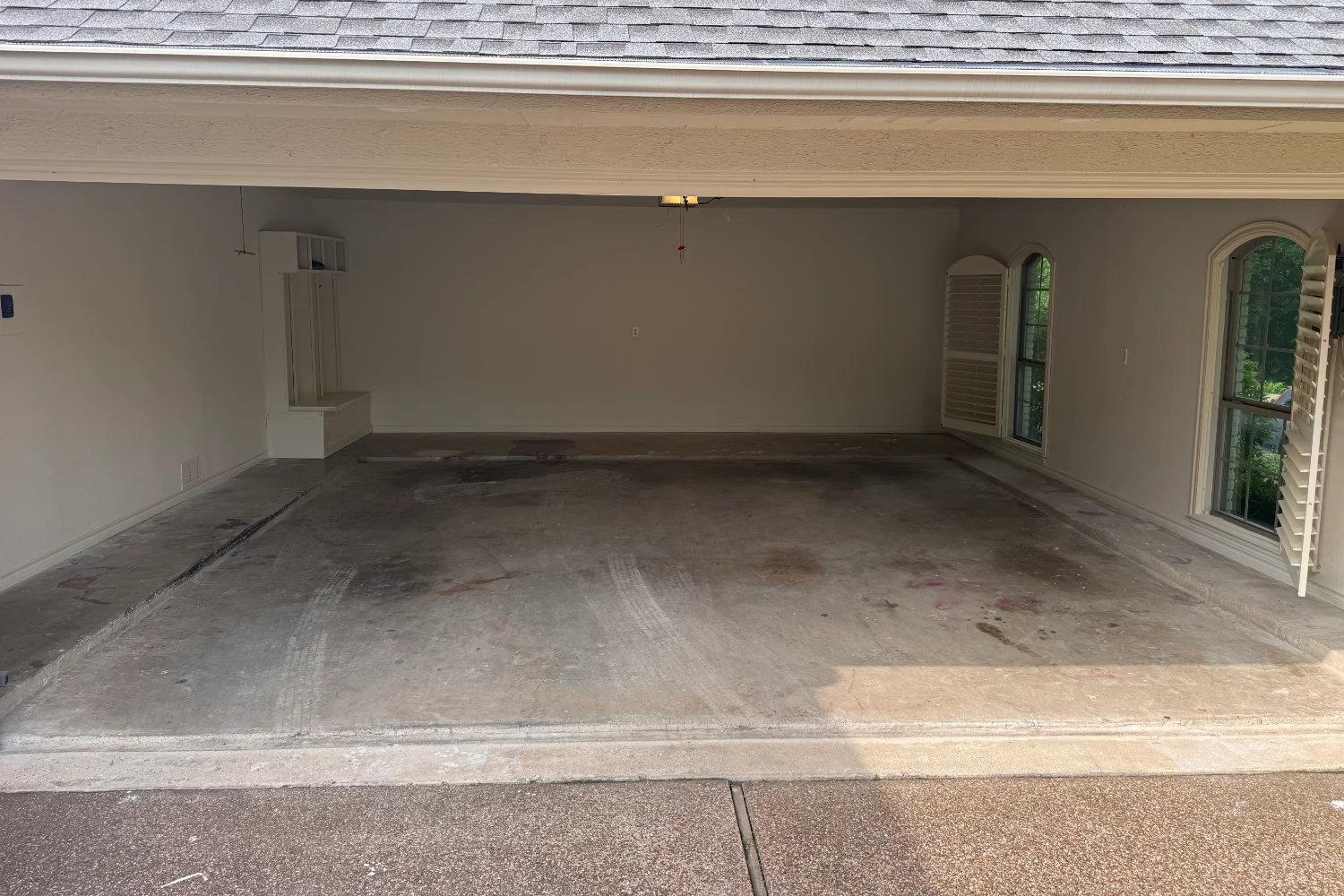
Many garage floors with cracks, pitting, or surface damage can be repaired and prepared for a professional coating system.
However, significant movement or structural damage may require evaluation before any coating is installed.
Epoxy protects and improves concrete, but it should not be used as a substitute for necessary structural repairs.
Epoxy Over Cracked Concrete in Dallas
Homeowners in Dallas should not assume that an older or cracked garage floor cannot be coated.
The condition of the concrete matters more than its appearance alone.
Prados Concrete Coatings provides residential epoxy flooring in Dallas for garages and other concrete surfaces throughout the DFW area.
Get Your Cracked Garage Floor Evaluated
If your garage floor has cracks, pitting, old coatings, or surface damage, the best first step is an inspection.
Prados Concrete Coatings can evaluate the concrete, determine what preparation is required, and recommend the appropriate coating system.
Request a free garage floor coating estimate in Dallas to determine whether your cracked concrete is ready for epoxy flooring.
Frequently Asked Questions
Can epoxy fill concrete cracks?
Small cracks can often be repaired before epoxy installation, but the coating itself should not be treated as a structural crack repair.
Should garage floor cracks be repaired before epoxy?
Yes. Cracks should normally be evaluated and repaired before the coating is installed.
Will epoxy stop concrete from cracking?
No coating can guarantee that concrete will never crack again, especially if the slab continues moving.
Can you epoxy badly damaged concrete?
Possibly, but severely damaged concrete may require extensive repair or additional evaluation before coating.
Can moisture affect epoxy over cracked concrete?
Yes. Moisture can interfere with adhesion and should be evaluated before installing the coating.